|
Getting your Trinity Audio player ready...
|
How Tuina and Stretching Unblock Energy Flow and Relieve Pain from Head to Toe
Have you ever noticed how pain in one part of your body can seem linked to pain in a completely different area? It’s not always obvious, but Traditional Chinese Medicine (TCM) provides an interesting perspective on these surprising interconnections.
A Surprising Link
One of my patients came to me with what she believed were isolated issues: migraines, low back pain, and stabbing pain at the bottom of her feet (plantar fasciitis). What she didn’t expect was that these seemingly unrelated problems were all connected.
Her migraines often developed after hours of sitting, as tightness in the back of her legs would travel up her back, eventually reaching her neck and triggering a migraine. The stiffness in her lower back was worse in the mornings after sleeping on her back, and it was accompanied by tension in her calves that led to sharp foot pain as soon as she got out of bed. All these issues are connected through the Bladder meridian running along the back of the body from head to toe.
How TCM connects the dots of pain
According to TCM, the body is a network of pathways called meridians. These channels aren’t just energy pathways, they also connect distant parts of the body, offering insight into how pain or tension in one area can affect another. The Bladder meridian offers a clear illustration of these interconnections.
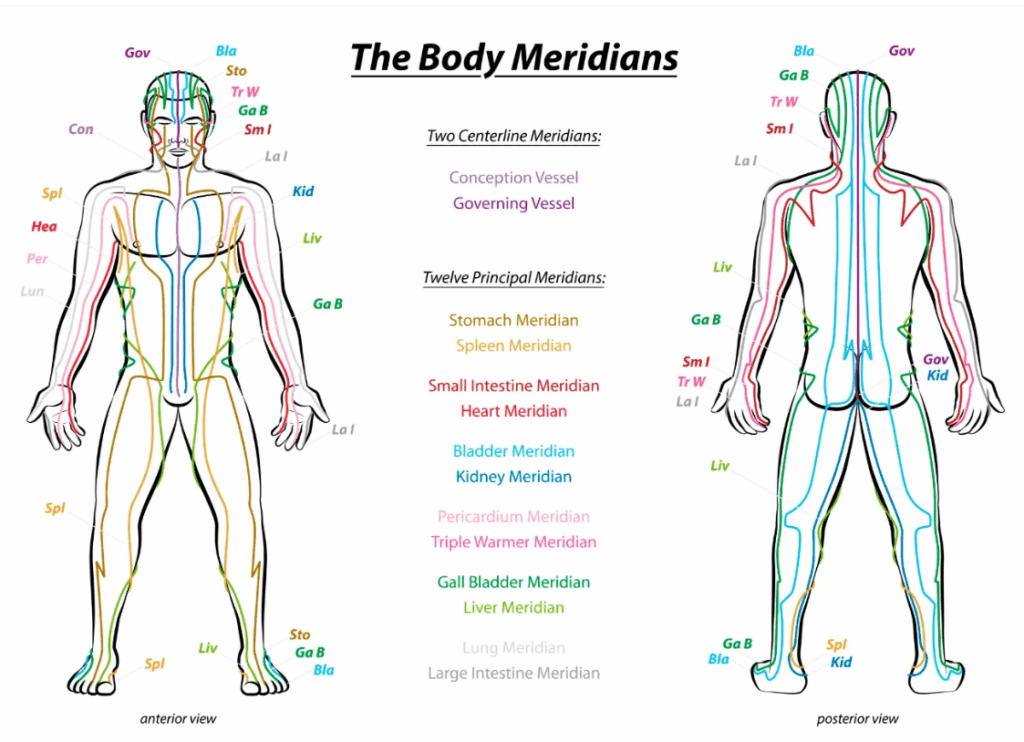
Anatomically, this pathway overlaps with major muscle groups and connective tissues along the back of the body, including the calves, hamstrings, and spinal erectors, which contribute to mobility and upright posture. Therefore, treating the Bladder meridian offers a holistic way to address seemingly disconnected symptoms along its pathway.
Simple Solutions: Stretches and Massage
To address my patient’s pains, I recommended stretches and massage targeting the Bladder meridian. A simple yoga pose, downward-facing dog, became her go-to stretch. This pose elongates the entire back of the body, from the soles of the feet to the neck, following the path of the Bladder meridian.
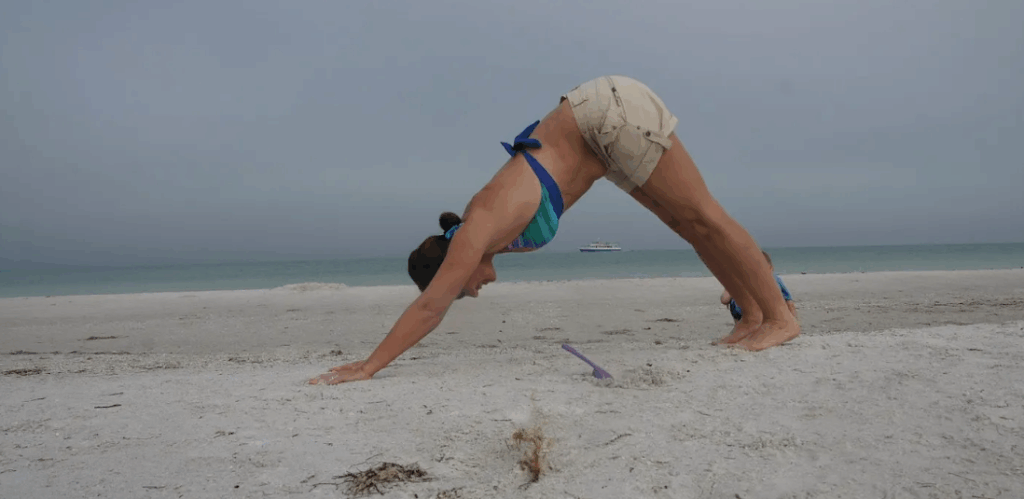
By focusing on calf stretches, she found that downward-facing dog released tension in her plantar fascia, relieving the stabbing pain in her feet. Stretching her hamstrings eased tightness in her lower back, also helping to prevent migraines. Incorporating habits like avoiding prolonged sitting, getting up regularly, and self-massaging the back of her legs further supported the flow of energy and blood, preventing stagnation along the meridian and therefore migraines before they even started. Consistent practice kept her body from head to toe more relaxed and flowing.
Tuina: A Powerful, Underused Tool
Tuina is one of TCM’s hands-on therapies using techniques such as kneading, pressing, and stretching to release stagnation and restore the natural flow of Qi. It works with the same points and follows the same meridians as acupuncture, offering a needle-free alternative to release stagnation and relieve pain.
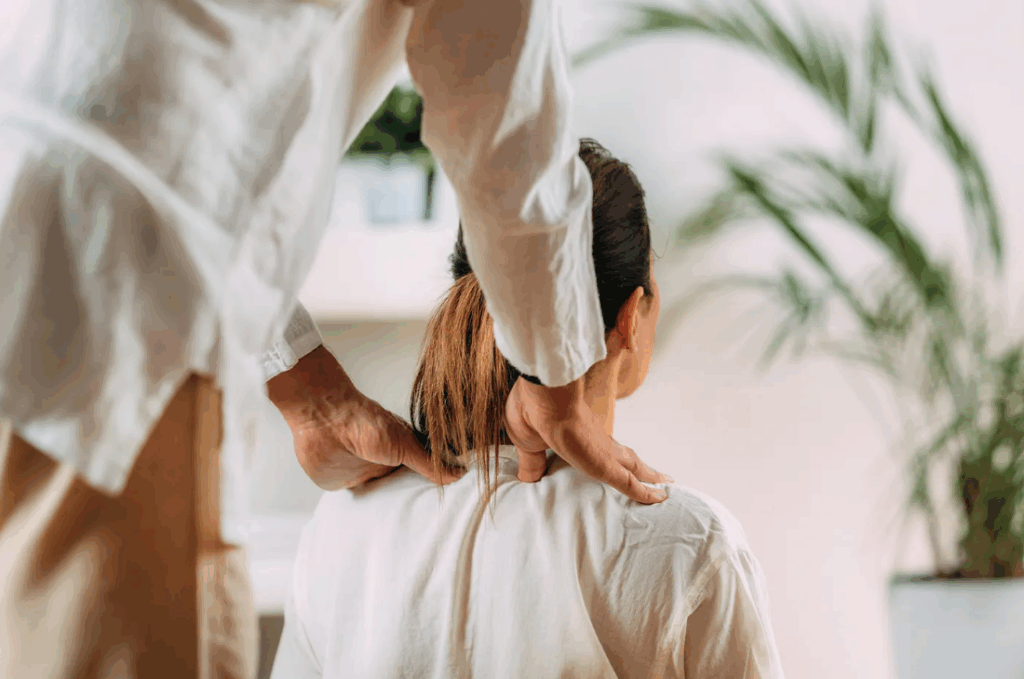
Massage along the Bladder meridian further helped my patient. By focusing on key areas such as the calves, hamstrings, and upper back, I was able to release deep-seated tightness that led to her discomfort. Releasing these tension points along the Bladder meridian reduced strain on weaker areas like the soles of her feet, lower back, neck, and head. With consistent stretching and massage, she was able to prevent her symptoms from returning.
What I want to emphasize here is that her role in the process, incorporating stretches, building new habits like getting up regularly, and practicing self-massage, was just as crucial, if not more so, than the work I did during our weekly sessions. The true progress came from helping her understand the connection and empowering her to take an active role in her own healing journey.
Stretching Solutions for Growing Teens
I also want to point out that a group of patients who often struggle with similar issues are rapidly growing teenagers. The interconnection of pain along the Bladder meridian is quite a common pattern in adolescents, especially boys, who tend to be taller and stiffer than girls. Tightness in hamstrings and calves can lead to poor posture, rounded backs, Achilles tendinitis, and foot pain.
My 13-year-old son, who already stands six feet tall, is a prime example. To support him, I bought him orthopedic inserts, made sure he wears shoes with a slightly elevated heel, and encouraged him to practice the same stretches I recommended to my patient. Downward-facing dog, though challenging for him, has become a cornerstone of his routine. His knees bend, his heels lift, and his back rounds, but with consistent practice, the stretch has gradually loosened his calves and hamstrings. This not only helps him sit up straighter but also relieves tension in his calves, reducing pain in his Achilles tendons and the soles of his feet.
For tall, stiff kids, stretches like these are essential for preventing postural and musculoskeletal issues as they grow. It’s quite simple once you know, but every mom knows the real challenge lies in getting them to actually follow through.
Conclusion
The Bladder meridian example shows us that the body is far more interconnected than we may imagine. What seems like localized problems, a migraine, foot pain, or backache, were parts of a larger picture. By addressing stagnation along any meridian through stretches and targeted massage, we can restore free flow and alleviate pain at multiple points along this pathway.
If you suffer from pains that are along the Bladder meridian, consider the possibility that they are interconnected. Some stretching or massage could be your solution to restoring free flow from head to toe.