<?xml version="1.0" encoding="utf-8"?><feed xmlns="http://www.w3.org/2005/Atom" xml:lang="en"><generator uri="https://jekyllrb.com/" version="3.10.0">Jekyll</generator><link href="https://adeglon.github.io/feed.xml" rel="self" type="application/atom+xml" /><link href="https://adeglon.github.io/" rel="alternate" type="text/html" hreflang="en" /><updated>2026-09-05T01:51:05+00:00</updated><id>https://adeglon.github.io/feed.xml</id><title type="html">Agnès Déglon-Fischer</title><subtitle>Agnès Déglon-Fischer — a scientist&apos;s mind, a healer&apos;s heart, a mother&apos;s humor. Essays on health and science, soul and self, and family misadventures, and the home of The Within Trilogy.</subtitle><author><name>Agnès Déglon-Fischer</name></author><entry><title type="html">Things Nobody Told Me About Becoming a Volleyball Mom</title><link href="https://adeglon.github.io/things-nobody-told-me-about-becoming-a-volleyball-mom/" rel="alternate" type="text/html" title="Things Nobody Told Me About Becoming a Volleyball Mom" /><published>2026-07-19T17:00:00+00:00</published><updated>2026-07-19T17:00:00+00:00</updated><id>https://adeglon.github.io/things-nobody-told-me-about-becoming-a-volleyball-mom</id><content type="html" xml:base="https://adeglon.github.io/things-nobody-told-me-about-becoming-a-volleyball-mom/"><![CDATA[<p>A Family Misadventure</p>

<h3 id="how-it-all-started">How It All Started</h3>

<p>It all started with a $50 tryout: six hours of volleyball over three days. As both my boys played, I thought, this was the perfect and affordable childcare for my younger one while his big brother tried out for real.</p>

<p>What I didn’t see coming was that thirty minutes in, a coach offered my eleven-year-old a spot on the green team, while my older one landed his spot on the black team.</p>

<p>And that’s how fifty dollars turned into several thousand, several states, several hotels, and a migraine I’ve come to think of as a family member.</p>

<p>My younger one was extremely proud of himself. He had proven Mama wrong. I’d told him it was just to get some playing time; he’d joked — or so I thought — that he was going to make a team.</p>

<p>I was considerably less proud, but signed him up anyway. After all, we were already going to drive his brother to every tournament. At least this way he’d get to play instead of spending weekends sitting in a gym watching.</p>

<p>Little did we know what we had just done.</p>

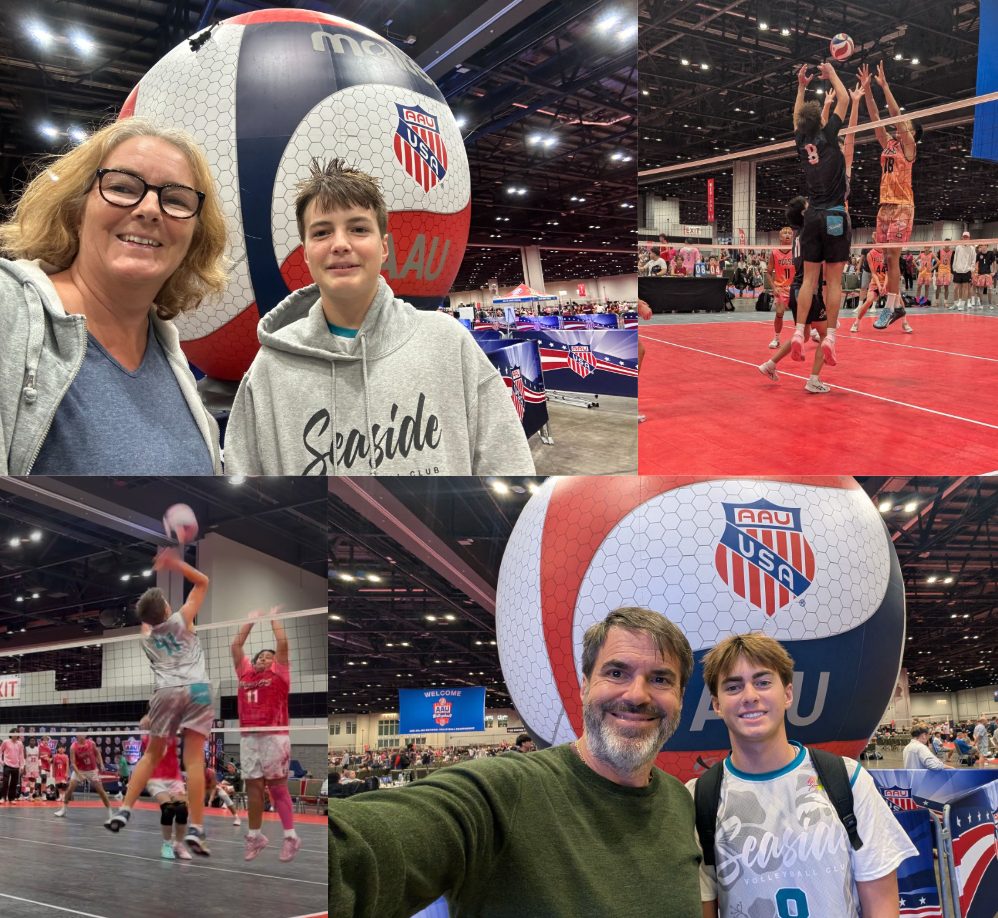
<p><img src="/assets/images/medium-things-nobody-told-me-about-becoming-a-volleyball-mom-1.jpg" alt="AAU at Orlando Convention Center (photos by author)" />
<em>AAU at Orlando Convention Center (photos by author)</em></p>

<h2 id="welcome-to-the-universe-of-travel-volleyball">Welcome to the Universe of Travel Volleyball</h2>

<h3 id="the-practice-schedule">The practice schedule</h3>

<p>Our club’s travel volleyball organizer does not believe in routine. Some clubs have practice schedules. Not the one we picked, they have monthly surprises. Every month, a new schedule: different days, different times, every week something different. Practices might run 5:30 to 7:20, or 7:30 to 9:20pm on random weeknights. And of course, with two players, some weeks we got four different nights. Then mid-year it shifted to 7:20 to 9:10pm (thanks for the ten minutes to the coaches who actually stopped at that time). And in summer, everything changed again and practices were 5–7pm or 7–9pm. Oh, and did I mention the occasional weekend schedule out of the blue? That was at 9am, 11am, 1pm, 3pm, or 5pm, on random Saturdays or Sundays.</p>

<p>And because I had two players on two different teams, there were Sundays when we drove to the gym at 1pm, 3pm, 5pm, 7pm, and 9pm, because one practiced from 1–3, the other from 5–7, and the first wanted open gym from 7–9… there went our Sunday. I wish I was exaggerating.</p>

<p>On rare occasions they practiced at the same time in the same gym. This sounds convenient until you discover one court is hidden behind a wall, and of course, one kid would always be on that court behind the wall. Being able to see both of my kids at once would apparently have made life too easy.</p>

<h3 id="progress">Progress</h3>

<p>As soon as practices started, we watched them grow, succeed inconsistently, and hit the ball into the net fairly consistently.</p>

<p>My younger one started out hitting it into the net between the two halves of the court. My older one, a head taller than everyone, clearly more developed, and just as clearly short on coordination and ball control, started out hitting it across the entire court at over 50mph and into the net separating different courts entirely.</p>

<p>That would change over the year. Time worked its magic. After a few months, they both managed to land the ball inside the huge square called the court, where the opposing team actually stood. Thank God they chose volleyball over basketball. That would have been a disaster.</p>

<p>Very quickly, my older son pretty much moved into the gym, joining every practice he could, and the libero of his team, who seemed to already be living there permanently.</p>

<h3 id="learning-the-rules">Learning the rules</h3>

<p>When I played volleyball in middle school, there was a simple rule. You had to serve to score. If the other team was serving and you won the rally, you didn’t get a point, you got the serve. Simple.</p>

<p>Apparently that rule is long gone.</p>

<p>So fine, rules change. And as I watched more, it seemed one kid was always setting, one always played middle, one right side, and so on. I naturally assumed they’d gotten rid of rotations too, because when I played, everybody rotated through every position.</p>

<p>But I was wrong, rotations are still there. Technically the players rotate, the server hits the ball, and then, in something that looks to me like a carefully choreographed evacuation drill, everybody sprints into the position they actually play.</p>

<p>As far as I can tell, rotations now exist primarily so the players can spend half a second somewhere they have absolutely no intention of staying.</p>

<p>I suppose some rules evolve while others survive for reasons nobody fully understands. I certainly don’t.</p>

<h3 id="raising-athletes">Raising Athletes</h3>

<p>There we were, proud new volleyball parents, deep in fall practice season.</p>

<p>It was going well… sometimes. Specifically when they ate and slept well, stretched, did their strength training, and were sort of beginning to grasp what it actually means to become an athlete.</p>

<p>But at that age, listening to your parents — who are, by definition of the teenage brain that just received a PhD in Life from the University of YouTube, completely clueless — is not on the menu. And stretching and real food are boring.</p>

<p>So some tournaments became a combination of eating a mountain of junk for six hours, feeling great, at least while chewing, then… oops, energy collapse. Better fix it with gummy bears.</p>

<p>“No, Mom, I don’t want the sandwich. Can you please go refill my water bottle? I’d like to stare at my phone and hang out with my friends who… stare at their phones. You’re my personal support system, remember?” Thank you to the coaches who occasionally took all their phones, of course, at the exact moment I was actually trying to communicate with my kid.</p>

<p>And then, at the end of the day, they were exhausted, needed real food immediately — and lots of it. And did I mention grumpy? Especially if they lost that last game, which amplified everything by a factor of ten. Or a hundred. Hard to say.</p>

<p>By Christmas they’d done three tournaments and apparently knew everything there was to know about travel volleyball.</p>

<p>Me?</p>

<p>Of course I was still the clueless one, despite the hundreds of hours I’d logged on bleachers next to Dad, watching them play.</p>

<p>“Oh, and by the way, Mom… why are the billion videos you take of me so blurry? And why is the format always wrong for Instagram? Dad does a much better job.”</p>

<p>Yes… You’re welcome, honey.</p>

<p>While the boys were learning to become athletes, we were learning to become travel volleyball parents.</p>

<p>Which, it turns out, is a sport of its own, requiring just as much strategy, endurance, and bench time… oh, and let’s not forget: rotations between mom and dad! Let me explain…</p>

<h3 id="tournament-day">Tournament Day</h3>

<p>I found out the hard way that there were morning and afternoon waves. And of course, one of my boys’ teams ended up playing mostly the morning waves, 7am-1pm, while the other played in the afternoon, 2–7pm. Which meant that, as a family with two players, we were in the gym… all day. Ugh.</p>

<p>Option one: we get up at 4:30 a.m., extract our grumpy teens from bed, and drive two or three hours while they sleep in the car.</p>

<p>Option two: we don’t.</p>

<p>Option one wasn’t working for a two-teams-in-the-same-day family, so we simply had to add a hotel night the day before, and pay for it, purely to protect our poor, exhausted, middle-aged nervous systems, which had just discovered they were in for 12-hour volleyball days, because six hours apparently wasn’t enough, unless… rotations! Dad takes the mornings, mom the afternoons, as soon as the schedule gets out we run into our positions and play from there, because I can tell you this much, this year sure felt like we were both on the roster.</p>

<p>But back to costs. After paying an amount I’m embarrassed to admit just to get our kids to play ball, plus several extra hotel rooms to stay sane, we also had to pay for parking, and for, get this, entering the gym to watch the child I birthed (okay, conceived, if you’re a dad, at least that part was fun), fed, raised, dressed, kept alive, driven to practices, and flown across the country.</p>

<p>So yes, after all that, we pay to watch our kids play, if we’re lucky. Or watch them watch their teammates play, if we’re unlucky, and they’re benched during the exact game I made the tremendous effort to show up for, because it’s out of system, aka out of my afternoon rotation.</p>

<p>And during all of it, in the loud gym, with your noise-cancelling ear things (assuming you didn’t leave them in the hotel room while questioning why any adult would set up an event that loud in the first place — the refs, you’ll notice, wear earbuds, some even sunglasses, to protect themselves; nobody has ever explained why the people who chose this job need more protective equipment than the players?! Did you see the coach wearing a helmet?), you may begin to question your life choices… and humanity. But maybe that’s just me.</p>

<p>Because what else is there to do during endless tournament hours between games?</p>

<p>You could walk across an enormous neighboring parking lot and accidentally miss your kid’s rotation. You could buy a wildly overpriced açaí bowl that pretends to be healthy because of the sweetened strawberries piled on top of what is, structurally, sugar ice cream. You could buy a $10 water bottle because you forgot yours. You could lock yourself in a quiet bathroom stall purely to give your nervous system a break, and hear another mother already in the next stall, doing exactly the same thing, in silence, in solidarity. Or you could sit in your car and accidentally drain its battery, or sit on the floor of a giant convention center, because there isn’t enough seating for the parents who paid an arm and a leg to be there.</p>

<p>Choose your option.</p>

<p>We drove and flew them all over the place for ten months, and if no one had told me where I was, I wouldn’t have known, because every convention center looks the same from the inside. Well… unless you step out of the blasting, freezing Florida air conditioning into the sauna that Floridians simply call “outside.”</p>

<p>They could have sent me to the moon and I wouldn’t have noticed.</p>

<p>Enormous noisy halls. Far too many people. Whistles everywhere. And some courts a bright, aggressive red, as if the migraine needed help.</p>

<p>During warm-ups, we doubled as human shields for stray balls, because we were that close to the court. Back up, though, and you’d get hit from behind by balls from the next court over. If those came from older teenagers, you were genuinely safer facing the 14U serves.</p>

<p>All of which is to say: thank God our kids became volleyball players, because as goalies they would have sucked.</p>

<h3 id="the-parent-bench">The Parent Bench</h3>

<p>That’s where all the benched parents sit, all of them, every time. So please, kids, stop complaining when you get benched, because there is an age when it’s… forever.</p>

<p>And what do we do? Well, that depends. Some of us record and produce beautiful, steady, correctly formatted videos and photos (thank you so much for sharing those!). Others of us come home with photos, because we forgot to switch the phone to video. Or with forty seconds of blurry gym ceiling, because we hit record when we meant to stop, and stop when we meant to record. And on the rare occasion we capture the actual play, it’s in the wrong format — at least according to teenage-YouTube-PhD-brain, because it goes blurry when he uploads it to Instagram. So… thank you again, first group, so very much, for sharing yours.</p>

<p>Then, getting back to what else is happening on the parent bench: some of us cheer occasionally and quietly, others enthusiastically, loudly, and incessantly. My ears still ring with your enthusiasm late at night, in the dark and quiet of my bedroom… You know who you are. So, to those who shall not be named: 10pm is the curfew. Please respect! Greatly appreciated.</p>

<p>Personally, I’m on the quieter side. I do switch categories though, but I never go to the full you-know-who-you-are extreme. I start in the cheering-quietly-and-sometimes category, especially in the first match. But more precisely:</p>

<p>On day one, I cheer for the win.</p>

<p>On day two, I really hope they win in two sets, not three — so I cheer for that second set to finish.</p>

<p>On day three, I cheer rarely, because by now the bright lights, loud whistles, red courts, incessantly bouncing balls, squeaking shoes, and the you-know-who-you-are parents have destroyed my eardrums and eyeballs, and all my efforts to relax, enjoy, and keep the migraine at bay have failed. So I go quiet. Really quiet. In a really, really loud gym.</p>

<p>And if it’s bracket play, I go even quieter than really really quiet, because I might accidentally cheer for the other team so we can go home early — but that is not something you can say out loud, so… even quieter!</p>

<p>But I’ll whisper the hypothesis that maybe, just maybe… I’m not the only one. And of course, only moms would maybe do that. Dads would never. No, of course not!</p>

<p>And if there’s a day four, I send Dad, because… I just can’t take it anymore.</p>

<p>Now, when we’re not cheering, we may be complaining, because our kid is benched, right after telling our kid not to complain because they’re benched. And then find out it’s called rotation! First we wonder quietly, mentally, then a little louder to our neighbor, and eventually even louder, to the coaches.</p>

<h3 id="conversations-with-the-coaches">Conversations With the Coaches</h3>

<p>At some point, every volleyball parent develops an irresistible urge to have a perfectly calm, completely reasonable conversation with the coaches — usually to remind them that you signed up to watch your kid play, not to fly them to the far side of the country to watch them watch their teammates play.</p>

<p>Before walking over to the coaches, I always tried to remind myself of one important detail: this is my child. Which means I’m simultaneously overly critical and overly protective — a fascinating combination I tried very hard to hide while surely failing. I’m fairly certain everyone could see right through me, mostly because every parent was doing a version of the exact same thing.</p>

<p>I did have genuinely meaningful conversations with our coaches, and I’m grateful for them. I’m still not a volleyball expert, but I’ve got the best seat for becoming one — and after all those conversations, I do have some answers I’m eager to share with you. Or should I say… one answer. The answer.</p>

<p>Why did that kid play for one minute and then disappear?</p>

<p>Rotations.</p>

<p>Why are two players suddenly holding hands before the serve, only to sprint in opposite directions half a second later?</p>

<p>Rotations.</p>

<p>Why is one player standing in the middle of the court doing absolutely nothing until the referee nods and the libero sprints on?</p>

<p>Rotations.</p>

<p>Why are they all pointing at each other while some more expressive coaches yell their positions because nobody knows where they’re supposed to stand?</p>

<p>Rotations.</p>

<p>Why did that kid play the entire tournament while others barely touched the floor?</p>

<p>Rotations.</p>

<p>By Christmas, that one word was ringing in my ears like that famous song built around… well… one word.</p>

<p>Tequila!</p>

<p>I still don’t understand rotations. I couldn’t explain them to you if my life depended on it — or with the help of tequila. But I now know, with complete certainty, that if you ever ask a volleyball coach a question about playing time, the answer is almost certainly:</p>

<p>Rotations.</p>

<p>And suddenly it all made sense. That’s why rotations were still a thing! Otherwise, what would the coaches answer?</p>

<p>Luckily for me, I found one coach who became my favorite complaint recipient. It didn’t feel fair to unload on the younger coaches. They practically lived in that gym, pouring endless hours into these kids. So, to the coach who became my favorite sounding board: thank you for listening. And to the younger coaches, thank you for all the hard work and endless hours on the courts. … You’re welcome.</p>

<p>From the parents’ bench, this is what it looks like.</p>

<p>Travel volleyball is an enormous commitment of time, money, weekends, hotel rooms, and emotional energy. We all want our kids to improve. We all know that not everyone can be on the court all the time (rotations!), but confidence matters too. We signed up hoping you’d help turn our kids into great volleyball players, while at home we’re trying to turn little humans into kind, resilient, confident young adults.</p>

<p>At Christmas, two weeks after I was told the new recruits would not be joining our team, I received an email saying, “Please welcome the new recruits to our team.” They turned out to be wonderful kids with lovely families — but adding players halfway through the season reshuffles everyone’s position and playtime.</p>

<p>And I’m sure…</p>

<p>Rotations.</p>

<p>So I reserve the right to be surprised — and amused — by both the timing and the email.</p>

<p>I do think there’s a more transparent way to approach it though. Tell parents during recruitment: this team is here to win. Or tell them: this team is here to give every player an opportunity to grow. Either philosophy is perfectly reasonable. Just let families know what they’re signing up for, and maybe don’t change halfway through the season. Managing expectations goes a long way when the commitment is measured in dollars, weekends, miles, and heart.</p>

<h3 id="nationals-on-the-other-side-of-the-country">Nationals On the Other Side of the Country</h3>

<p>But why? Do volleyballs bounce better over there?</p>

<p>Anyway, we made it to the AAU Nationals in Orlando, Florida. Of course, I was sure nothing unexpected would happen. I was sure everyone would get enough sleep. I was convinced nobody would forget their jerseys, every teenager would make excellent nutritional choices, and all parents would remain calm and emotionally regulated at all times, myself included.</p>

<p>And that’s almost exactly how it happened… except for:</p>

<ul>
  <li>
    <p>Some jetlag messing with our sleep</p>
  </li>
  <li>
    <p>Some excessively freezing AC trying to compensate for global warming and Florida heat at noon in July</p>
  </li>
  <li>
    <p>Some Orange County Convention Center food that cost a fortune and didn’t taste like it</p>
  </li>
  <li>
    <p>Some last-minute panics about forgotten jerseys</p>
  </li>
  <li>
    <p>Some very full schedules that turned long gym days into even longer “vacation” days — and perfect schedules for families with multiple players, who either got two full weeks or one week of 14-hour days</p>
  </li>
</ul>

<p>It was absolutely, insanely fantastic. The kids had a blast, some parents were hanging on to life, the wallets felt much lighter, and the coaches must be superhuman. I was more exhausted than the kids who spent every minute on the court, and I was very grateful when it was over.</p>

<h3 id="thank-you">Thank you!</h3>

<p>Thank you to the coaches.</p>

<p>For working relentlessly to help my kids grow on the court. For running practices hard enough that they came home wired, starving, and in desperate need of a shower, even when those practices ran way past 9 p.m.</p>

<p>They thrived on it.</p>

<p>Meanwhile, I was sleepwalking into a grumpy zombie because it was waaaay past my bedtime.</p>

<p>That part’s on me, not you.</p>

<p>And I’m proud of my two kids.</p>

<p>They grew… two actual inches, right out of the uniform sizes I’d ordered at the beginning of the season, but also as athletes, and as human beings, inside this extraordinary mess that we, the adults, create for them, and that we, the parents, pay for.</p>

<p>I’m learning that sometimes the greatest athletic achievement isn’t what happens on the court, it’s surviving several days in a convention center and still loving everyone when we get home.</p>

<p>So you’ll understand that writing this is part of my… dealing mechanism… healing mechanism… slow recovery… because we just finished Nationals, and summer season has already started, and we’re already talking about tryouts for next year.</p>

<p>And no, next year the tournaments won’t be politely spaced three weekends apart, because my boys won’t play in the same age group anymore. So instead of driving to a tournament every few weekends, it’ll be… much more. 🥴</p>]]></content><author><name>Agnès Déglon-Fischer</name></author><category term="Misadventures" /><summary type="html"><![CDATA[A Family Misadventure]]></summary><media:thumbnail xmlns:media="http://search.yahoo.com/mrss/" url="https://adeglon.github.io/assets/images/medium-things-nobody-told-me-about-becoming-a-volleyball-mom-1.jpg" /><media:content medium="image" url="https://adeglon.github.io/assets/images/medium-things-nobody-told-me-about-becoming-a-volleyball-mom-1.jpg" xmlns:media="http://search.yahoo.com/mrss/" /></entry><entry><title type="html">Family Backpacking Weekend on Mount San Jacinto</title><link href="https://adeglon.github.io/family-backpacking-weekend-on-mount-san-jacinto/" rel="alternate" type="text/html" title="Family Backpacking Weekend on Mount San Jacinto" /><published>2026-07-01T17:00:00+00:00</published><updated>2026-07-01T17:00:00+00:00</updated><id>https://adeglon.github.io/family-backpacking-weekend-on-mount-san-jacinto</id><content type="html" xml:base="https://adeglon.github.io/family-backpacking-weekend-on-mount-san-jacinto/"><![CDATA[<h2 id="we-made-plans-the-wind-made-edits">We made plans. The wind made edits.</h2>

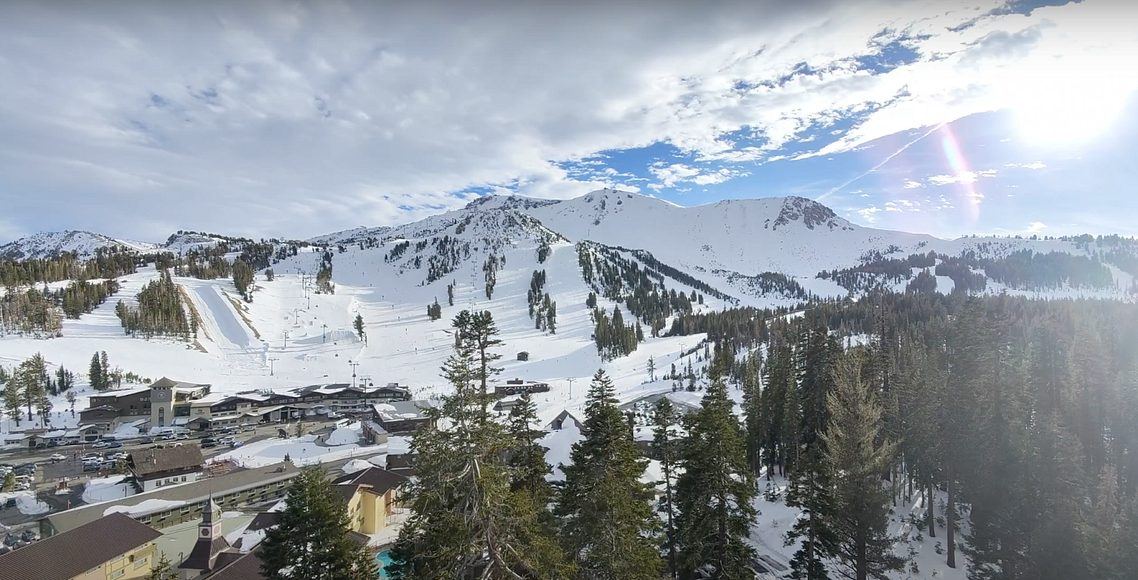
<p>We drove east on Interstate 10 through that wide valley where thousands of enormous white turbines stand spinning across the desert, and we did what everyone does the first time, we admired them. “Look at those, aren’t they impressive,” I said, pointing at these giant elegant things turning in perfect slow motion, silently harvesting the one resource that valley apparently has in absurd abundance: wind.</p>

<p>Our plan was almost perfect: ride the Palm Springs Aerial Tramway up, hike two and a half miles to Round Valley Campground, set up camp there for two nights, and spend the days hiking around with light daypacks: visit Hidden Lake on day one, and tag the summit on day two. Two nights, one basecamp, lots of altitude.</p>

<p>We weren’t out to conquer anything. We had exactly one question we wanted answered before our family attempted a higher altitude trail next spring, and that question was simply: how do we actually do at altitude, hiking it, and more importantly, sleeping in it? Mount San Jacinto, with its tramway that lifts you to over 8,500 feet in about ten minutes, seemed like the perfect way to find out.</p>

<p>We arrived in Cathedral City on Friday afternoon into a wall of heat, around 95°F, or 35°C, and checked into a hotel that was, for the record, lovely. Swimming pool, jacuzzi, a balcony with an actual outdoor fireplace. We admired it, silently wondering who on earth would ever use it in the middle of the desert. We had a beautiful dinner at the hotel restaurant (their chef, I will say now and repeat later, was genuinely wonderful), and we went to bed early because we wanted to catch one of the first trams up the mountain in the morning.</p>

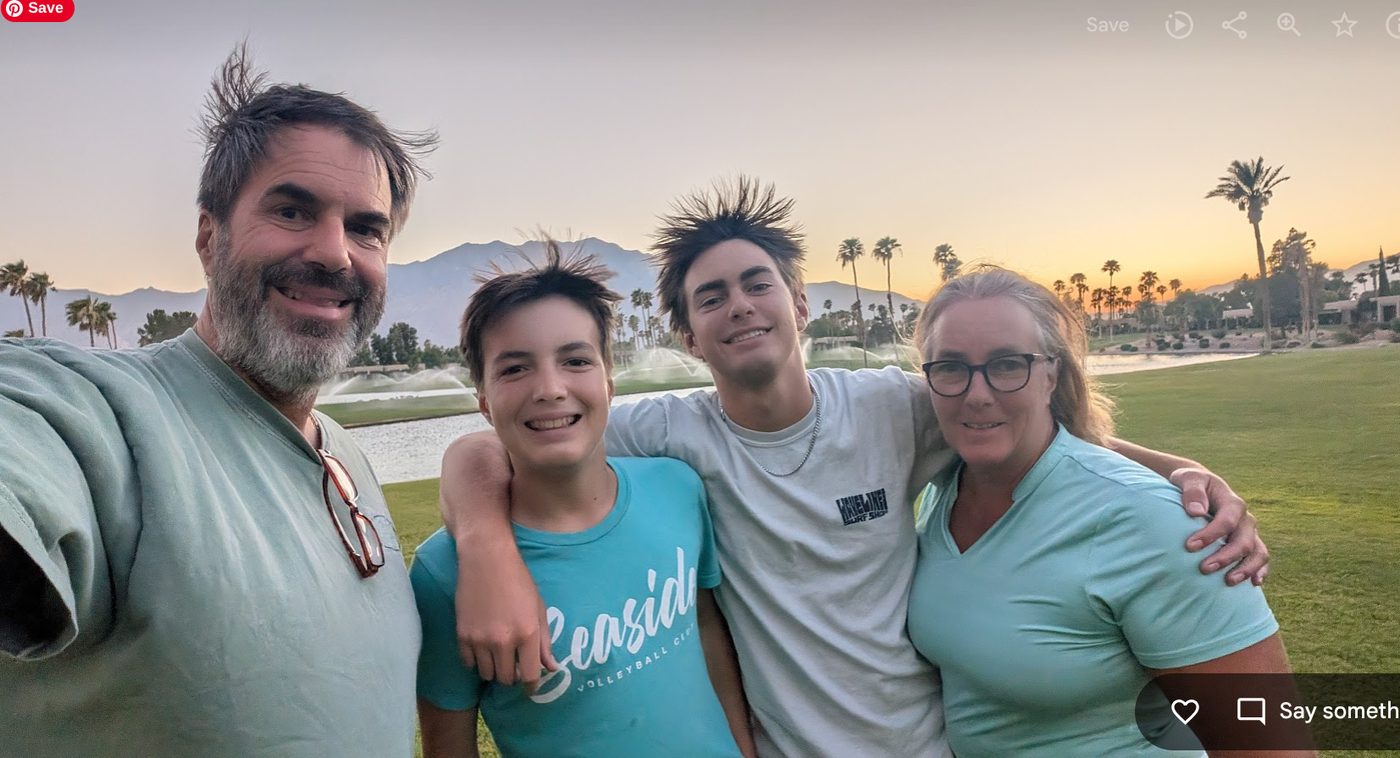
<p><img src="/assets/images/medium-family-backpacking-weekend-on-mount-san-jacinto-1.jpg" alt="Just a little wind at this point (selfie by author’s husband)" />
<em>Just a little wind at this point (selfie by author’s husband)</em></p>

<p>And then we didn’t sleep. The wind howled around that building all night long, gust after gust after gust, loud enough to yank my husband and I out of sleep on a rotating schedule. We lay there in that beautiful room feeling our nervous systems tense up, hours before we’d even gone up the mountain, wondering if the wind would shut down the tramway and decide for us that camping was not happening.</p>

<p>The next morning almost made up for the sleepless night, because the hotel put out a magnificent breakfast buffet: eggs however you wanted them, bacon, potatoes, oatmeal, fresh fruit, yogurt, waffles, cereal, pastries, fruit juice, coffee, tea… if there was ever a morning for backpackers to responsibly carb-load before walking into the mountains, the backpacker gods had just served it to us. We ate like people who suspected that the next couple of meals might be… freeze-dried.</p>

<p>Well fed and cautiously optimistic, we drove over to the Palm Springs Aerial Tramway, and the tram was running, which apparently meant the mountain was open and everything was fine, so up we went.</p>

<h2 id="just-dont-set-up-your-tent-under-a-widowmaker">“Just don’t set up your tent under a widowmaker”</h2>

<p>At the ranger station up top where I signed in, I asked about the weather, hoping to be reassured. The ranger smiled at me and said: “Winds tomorrow will reach 35mph gusts.” I must have looked genuinely horrified, because he immediately softened it with, “Oh, that’s after tonight when they reach about fifty miles per hour, but don’t worry, it’ll be fun.” And then, he simply added, “Just don’t set up your tent under a widowmaker.”</p>

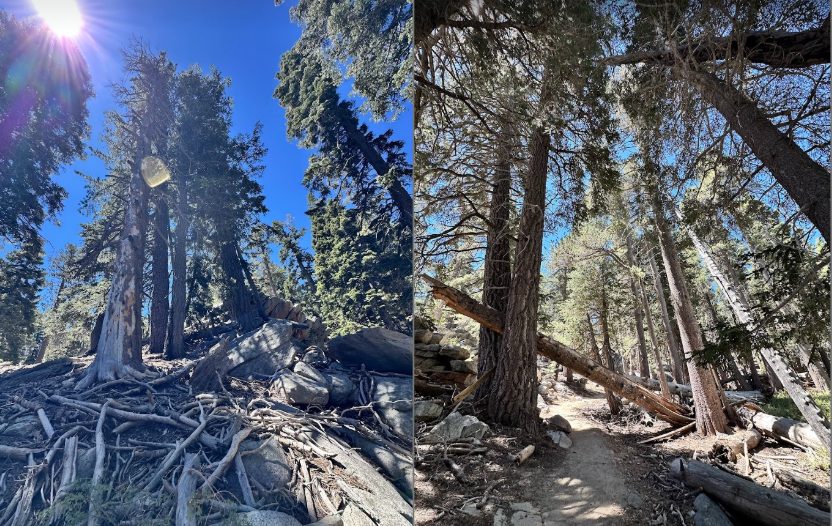
<p><img src="/assets/images/medium-family-backpacking-weekend-on-mount-san-jacinto-2.jpg" alt="Beautiful forest and a few potential widowmakers (photos by author')" />
<em>Beautiful forest and a few potential widowmakers (photos by author')</em></p>

<p>For anyone who hasn’t spent time around backpackers, a widowmaker is a dead tree, or a big dead branch still hanging up in a live one, waiting for exactly one strong gust to come down on whatever happens to be underneath. So the ranger’s complete safety briefing, delivered with a warm and genuinely reassuring smile, was essentially: fifty-mile-an-hour winds, have fun, do not sleep beneath the falling trees. Type 2 fun, I thought, taking a deep, oxygen-deprived breath.</p>

<h2 id="the-map-was-more-of-a-suggestion">The map was more of a suggestion</h2>

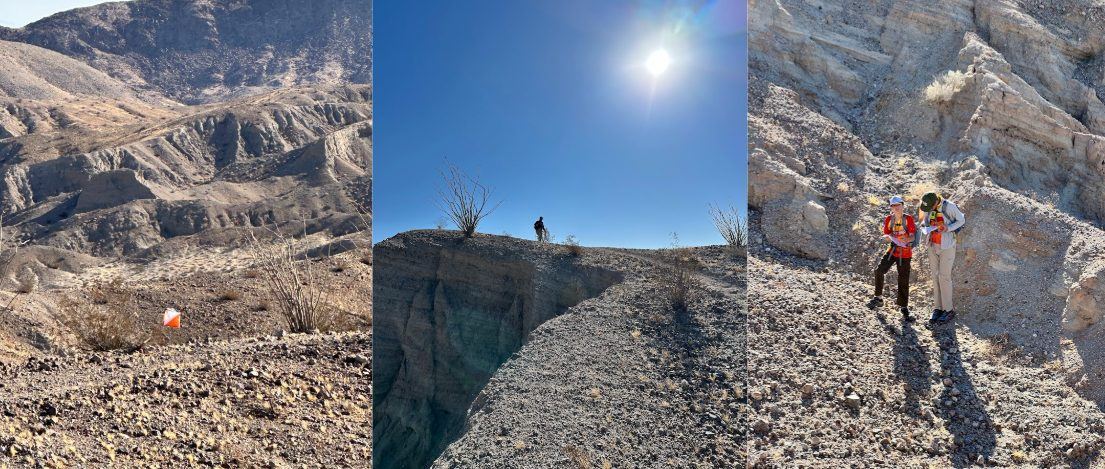
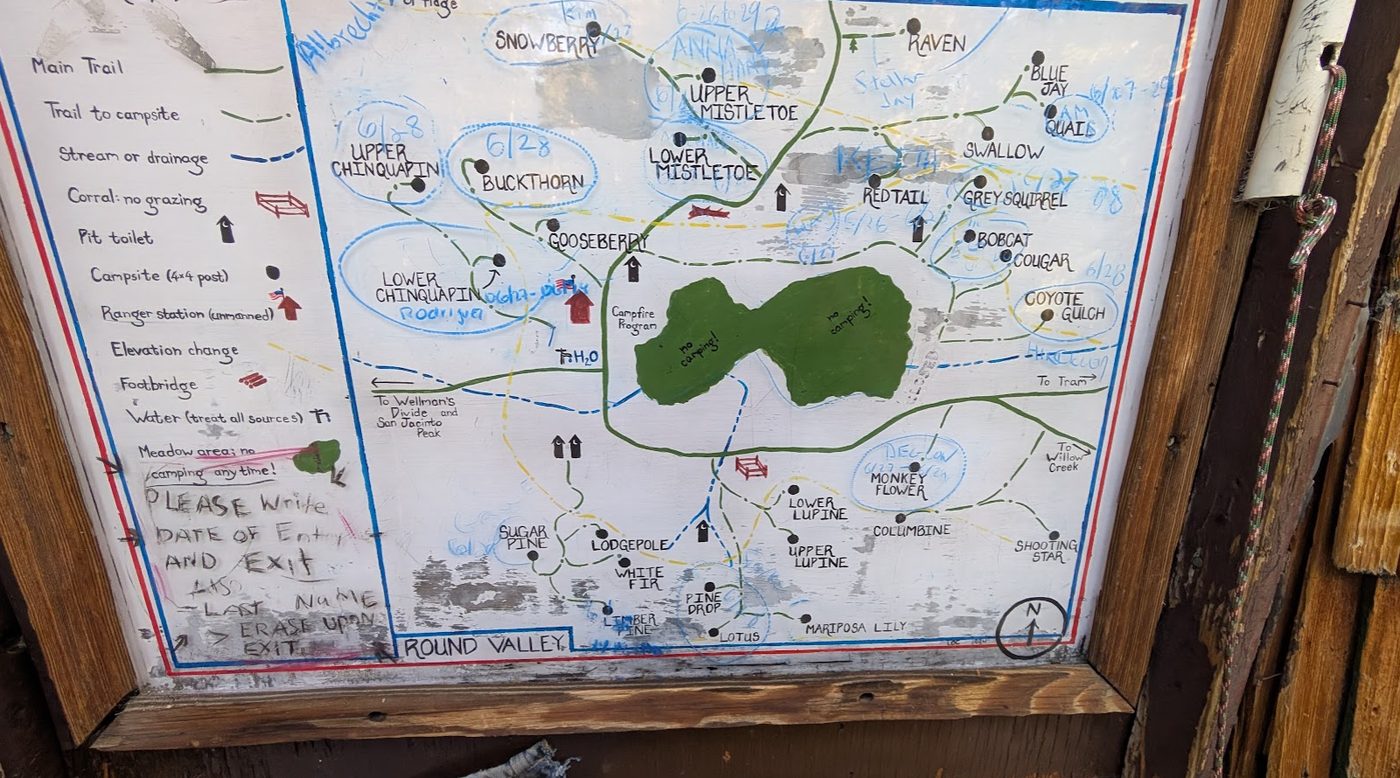
<p>The hike was everything we’d hoped for, uphill but short, rocky and gorgeous, exactly the kind of walking you want when the whole point is altitude and not misery. We made it to the campground fairly easily, found the campground map and stared at it for… a little longer than expected. The map was a loose approximation of where things might generally be, and finding an actual campsite turned out to be a confusing riddle. The ranger had told us we could set up about twenty-five feet from a campsite marker post, which is simple enough advice right up until you discover you cannot find a campsite post.</p>

<p><img src="/assets/images/medium-family-backpacking-weekend-on-mount-san-jacinto-3.jpg" alt="Campsite map (photo by author)" />
<em>Campsite map (photo by author)</em></p>

<p>So we picked a spot that looked reasonably sheltered between some rocks, set up our tents, and then walked back to the campground registration board and wrote our name where we believed we were. A little while later, my son set out to find the water and informed us with a shivering voice through the walkie talkie that he had found it (we had walked right by it on our way in) and that it was icy cold. As he couldn’t locate the bathrooms, I set out to wander around the campground and started to realize the size of it. I found three outhouses, all either locked or surrounded by “caution tape,” and had to use my GPS to get back to my tent. After lunch and an attempt of a nap, to make up for some of the missed sleep from the previous night, the wind decided it still wasn’t going to give me my well-deserved sleep. So I took out the camping permit I had received by snail mail from the Idyllwild ranger station. It clearly stated we had to be within 25ft of our 4by4 camp site post. We kept looking and eventually we came back to the campsite map on site, only to find that someone had erased our name and written theirs, because, apparently, they had found the actual marker post, and we, of course, had pitched our home in an imaginary campsite. At this point we still figured their map wasn’t clear and we had done our best.</p>

<h2 id="the-afternoon-we-hiked-nowhere">The afternoon we hiked nowhere</h2>

<p>Our plan for the afternoon was a lovely little hike out to Hidden Lake. We headed out from our imaginary campsite with our big but light backpacks. After half a mile we started to understand the size of this place, as we finally found the first open bathrooms, and next to it, a post indicating the direction to a campsite. We checked it out, and there it was, the first campsite marker we encountered, and the site was still unoccupied. We claimed it for its enormous advantage, its proximity to the only pit toilets with doors that actually opened. The only problem was, the doors wouldn’t stay closed, because… the wind. Still, I considered these little wooden cabins a positive thing, despite broken toilet seats and doors floating in the wind. We looked at each other, thought of our fully assembled campsite half a mile away, and hiked back to pack the entire thing back up and carry it down the trail: tents, sleeping gear, clothes, the whole household… relocated. Of course, the water source was back near where we’d started, so we hiked that same half mile again to fill up, and back again to camp. By the time we’d finished ferrying our lives back and forth across that stretch of trail, we’d walked a couple of miles without ever once going anywhere, and we were genuinely tired from moving, from setting up, from taking down, from setting up again, from lack of sleep and oxygen and excess wind. We agreed, unanimously and with great relief, that this counted as our afternoon hike. Hidden Lake stayed exactly as hidden as its name promised.</p>

<h2 id="the-wind-never-actually-stopped-talking">The wind never actually stopped talking</h2>

<p>By late afternoon the campground had most likely filled up, but we didn’t really know as we never saw any other campsites. The only thing we saw were people, just like us, hiking mile after mile, back and forth between the bathrooms and the water source. Tired from the adventures of the day, we had an early freeze dried backpacking dinner while dreaming of a far away but beautiful breakfast buffet, then crawled into our tents and called it a wonderful day. The tent itself didn’t move much at night, but high above us the enormous pines swayed and roared, and the wind wasn’t so much whipping through the camp as it was racing through the tops of the entire forest, with huge ocean-like sounds building and building overhead. It was overwhelmingly loud and scary, and every big gust brought the ranger’s cheerful little widowmaker comment floating right back into my head.</p>

<p>Looking around the forest, it was obvious the ranger hadn’t invented those mystical creatures at all. Dead widowmakers (aka fallen trees) lay scattered along the trails, while their still-standing relatives watched us from above, and the wind kept howling through the treetops, loudly insisting it had absolutely nothing to do with any of it.</p>

<p>The good news for me was that this wind-tormented forest was exactly the atmosphere I’d been hunting all weekend with my camera. I was hoping to find the perfect book cover for the novel I’m writing, and I was convinced I would find it somewhere up here. But that was my mission during daytime. For now, the mission was to sleep. It was… more or less successless. Several times that night the gusts came through so violently that I lay there shaking, while the boys, of course, slept like happy stones.</p>

<p>By morning the wind had backed off a bit, enough so that you could actually hold the bathroom door closed with a stick from the inside, that is, after putting the toilet seat back in its place. It had fallen off, not sure if it was due to old age or a gust of wind or both.</p>

<h2 id="the-morning-we-actually-hiked">The morning we actually hiked</h2>

<p>After a second nerve-racking, windblowingly sleepless night I was ready to get off this mountain, but we were here for a reason: hiking in altitude, not resisting wind.</p>

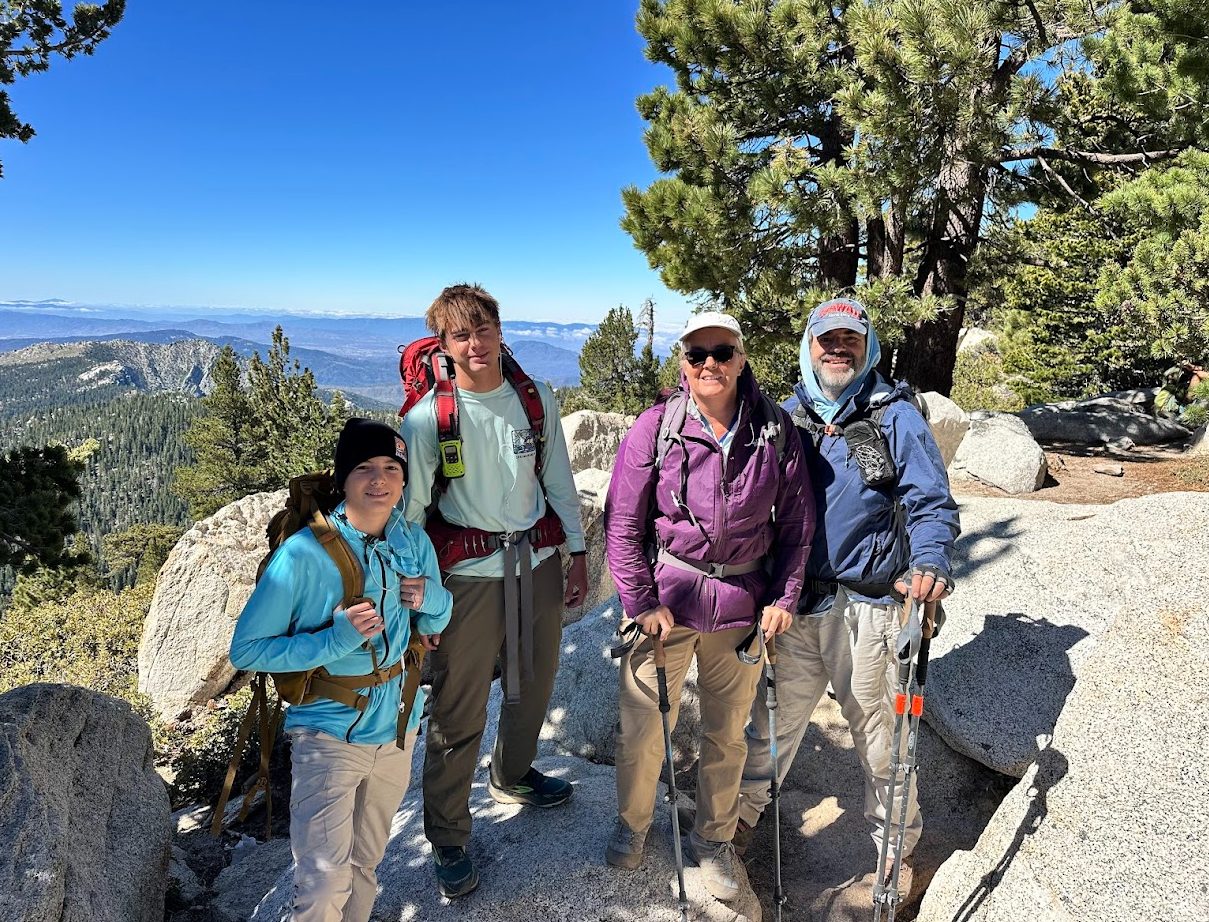
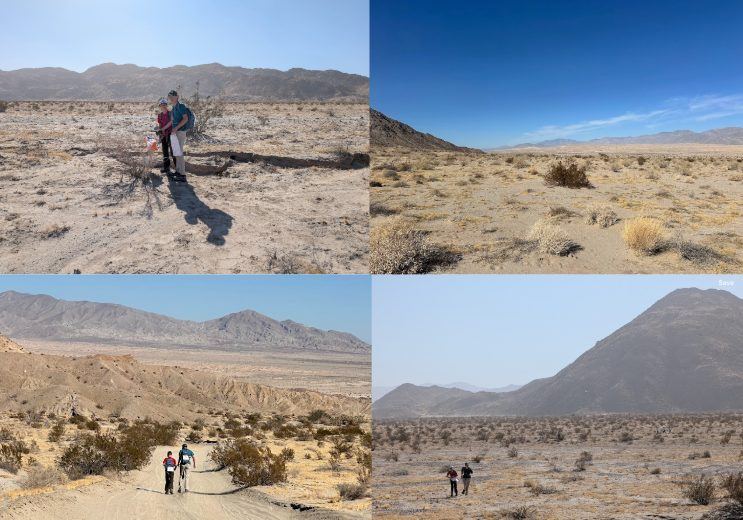
<p>So, we set off toward the summit as planned, because after all, this was the point of the weekend: the altitude experiment. And here’s the good news, the answer to our actual question: on the trail, everything felt fine. We were slower, sure, and breathing took a bit more deliberate effort, but the hiking itself was manageable, the views were spectacular, and we climbed to around 10,000 feet feeling like a family that could, in fact, do this.</p>

<p><img src="/assets/images/medium-family-backpacking-weekend-on-mount-san-jacinto-4.jpg" alt="Wellmans Divide on peak trail to Mt San Jacinto (photo by nice hiker on the trail)" />
<em>Wellmans Divide on peak trail to Mt San Jacinto (photo by nice hiker on the trail)</em></p>

<p>We got to within about one mile of the summit. And that’s where we stopped, not because we couldn’t keep going, but because of… the wind. Reaching the top meant very probably spending a third sleepless night listening to the wind audition tree branches over our heads. Somewhere in that calculation, the summit quietly stopped mattering. The far more appealing summit, suddenly, was a quiet room with a bed in it, a dinner that hadn’t first been reduced to powder and resurrected with boiling water, and an awesome breakfast buffet prepared by backpacker gods (aka that wonderful chef I mentioned before). So we turned around one mile short, making sure we would have time and energy to get back to camp, tear it down, and make our way back to the tramway safely.</p>

<h2 id="in-which-we-forgive-the-hotel">In which we forgive the hotel</h2>

<p>Hiking out, we were all motivated by the thought of a real ceiling that didn’t sway even if we could hear wind gusts through the walls. A solid building sure felt like a huge upgrade. So back we went, to the same place. It was heaven. After the dry desert winds the pool looked… irresistibly wet. The jacuzzi felt incredible. The little fireplace on the balcony felt magical. And the real luxury after two nights of living inside a wind tunnel was simply… silence. Aaahhh… finally!</p>

<p>Friday night, before the mountain, we’d had that lovely dinner at the hotel restaurant and did not finish our huge plates. We had eaten like civilized, unhurried, reasonable people. Sunday night we walked back into the same restaurant and ordered the same food. But this time, we were starving as though we hadn’t eaten in a week. Every plate was scraped clean. Then came dessert. Then cold smoothies. By the end there was not a crumb, not a smear, not a survivor left anywhere on that table. We sent our compliments to the chef.</p>

<h2 id="we-made-plans-the-wind-made-edits-1">We made plans. The wind made edits.</h2>

<p>So — we never reached the summit. We never found Hidden Lake. We spent more of the weekend relocating our campsite than actually hiking anywhere. And we learned a truly staggering amount about wind. But the question we came to answer got answered, clearly and generously: yes, we can hike at altitude. We go a little slower, we breathe a little harder, but we can do it. And as for me, the real challenge was not so much the climbing, it was sleeping. That third night, at the hotel, I finally slept. Though maybe by then I would have slept anywhere. The story doesn’t answer that question.</p>

<p>The wind rewrote our itinerary from the very first mile of I-10 to the last bite of Sunday’s dessert. Every plan we made, it answered the same way — oh, you had plans? — let me change them for you.</p>]]></content><author><name>Agnès Déglon-Fischer</name></author><category term="Misadventures" /><summary type="html"><![CDATA[We made plans. The wind made edits.]]></summary><media:thumbnail xmlns:media="http://search.yahoo.com/mrss/" url="https://adeglon.github.io/assets/images/medium-family-backpacking-weekend-on-mount-san-jacinto-4.jpg" /><media:content medium="image" url="https://adeglon.github.io/assets/images/medium-family-backpacking-weekend-on-mount-san-jacinto-4.jpg" xmlns:media="http://search.yahoo.com/mrss/" /></entry><entry><title type="html">What Could Possibly Go Wrong? Backpacking Catalina Island With Teens</title><link href="https://adeglon.github.io/what-could-possibly-go-wrong-backpacking-catalina-island-with-teens/" rel="alternate" type="text/html" title="What Could Possibly Go Wrong? Backpacking Catalina Island With Teens" /><published>2026-06-03T17:00:00+00:00</published><updated>2026-06-03T17:00:00+00:00</updated><id>https://adeglon.github.io/what-could-possibly-go-wrong-backpacking-catalina-island-with-teens</id><content type="html" xml:base="https://adeglon.github.io/what-could-possibly-go-wrong-backpacking-catalina-island-with-teens/"><![CDATA[<h2 id="the-trail-the-stingray-and-the-porta-potty">The Trail, the Stingray, and the Porta-Potty</h2>

<p>We boarded the morning ferry full of optimism, excitement, and far more confidence than our training hikes this year justified.</p>

<p>The morning boat ride took us to Avalon, where we stocked up on trail snacks — the same snacks we get tired of every trip, and yet somehow bring every single time.</p>

<p>My husband had his pack towering over him like he was once again hiking to Everest Base Camp, accompanied by the energy level of a sloth. A perfect match. Every time he sat down, he looked like he was about to fall asleep.</p>

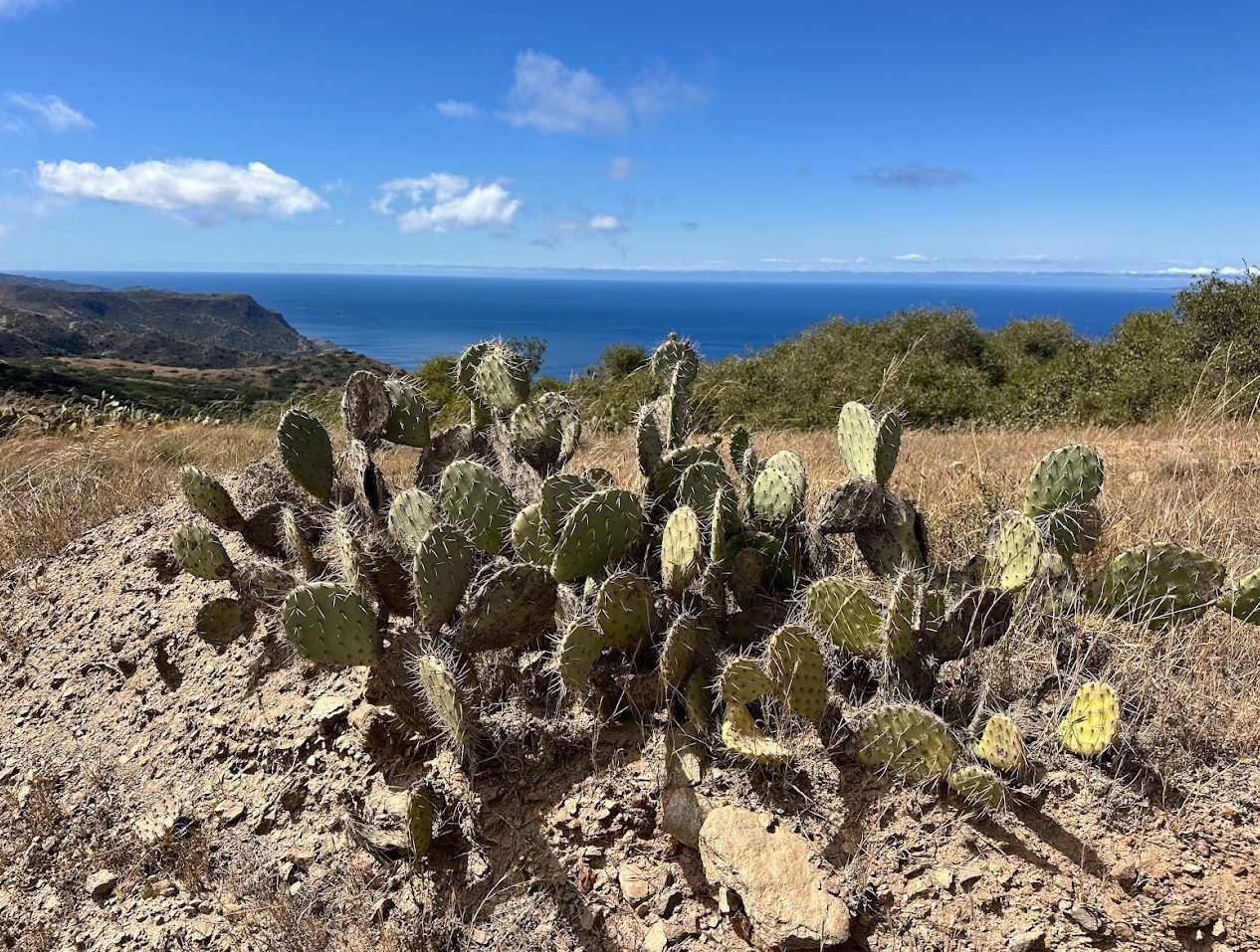
<p>After hiking the Trans-Catalina Trail from Avalon to Two Harbors the year before, we had decided to return for a shorter version, focusing only on our favorite section: the beautiful stretch from the Airport in the Sky down to Little Harbor and Two Harbors, easy, mostly downhill the first day, and scenic.</p>

<p><img src="/assets/images/medium-what-could-possibly-go-wrong-backpacking-catalina-island-with-teens-1.jpg" alt="View from Trans-Catalina Trail (photo by author)" />
<em>View from Trans-Catalina Trail (photo by author)</em></p>

<p>What could possibly go wrong?</p>

<p>While waiting for the shuttle, we discovered our beloved donut shop had permanently closed. We had been talking about those donuts for nearly a year.</p>

<p>We had also been talking about using gear haul for nearly a year.</p>

<p>We decided against it at the last minute.</p>

<p>Note to self: mistake.</p>

<p>We had trained less than the previous year, our packs were just as heavy, and deep down we all knew exactly what was coming.</p>

<p>Not immediately, the pain never starts immediately. The pain starts somewhere around mid-afternoon, when you’re too far along the trail and your only option is forward.</p>

<p>Before boarding the shuttle, we bought three matching quick-dry shirts because apparently adding more weight to our packs seemed like a great idea.</p>

<p>The shuttle ride was… crowded, uncomfortable, nauseating.</p>

<p>The website said we could bring large backpacks, but what the website didn’t say was that those backpacks would spend the ride sitting on our laps or wedged between our knees, because there was no trunk space. We were crammed together like sardines as the vehicle twisted along Catalina’s winding roads.</p>

<p>By the time we reached the Airport in the Sky, we must have looked… green.</p>

<p>We bought lunch. Some of us ate. I spent my lunch break in the bathroom and packed mine for later.</p>

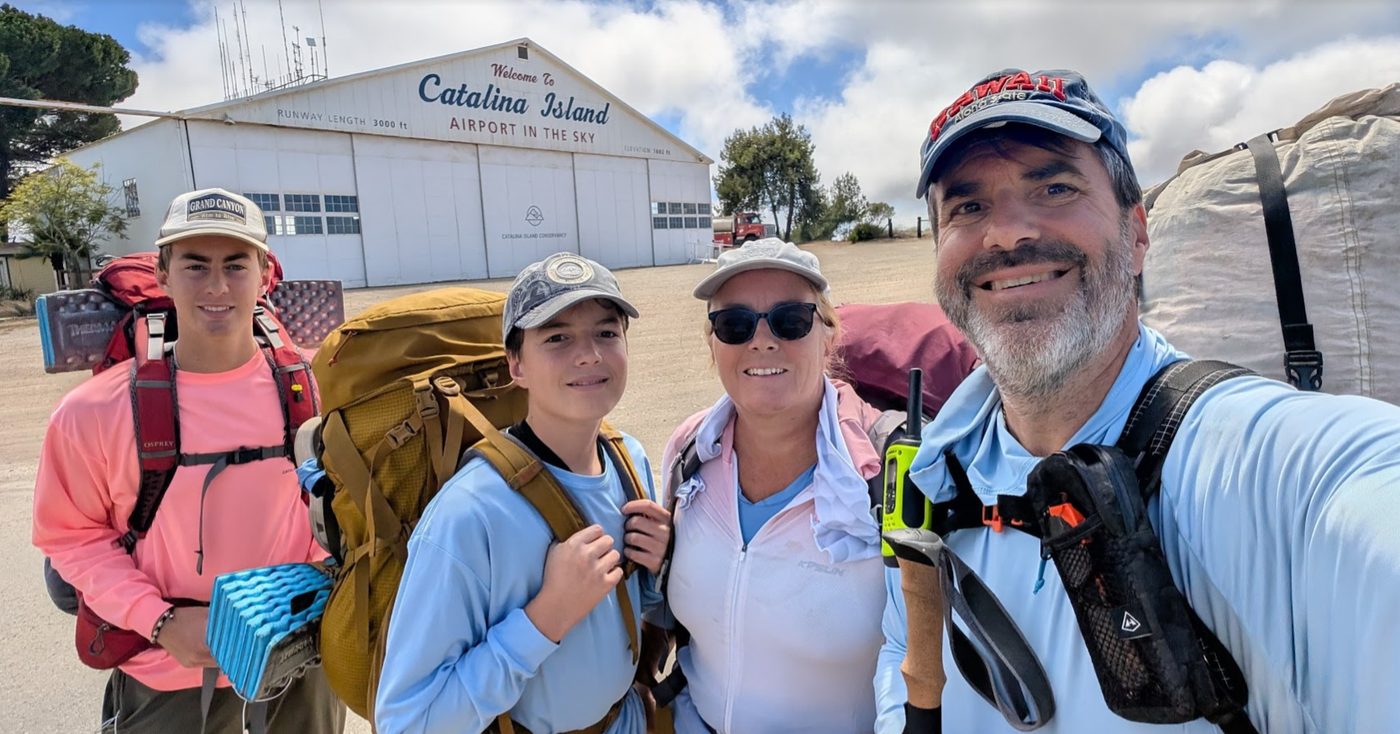
<p>Then we started down the trail.</p>

<p><img src="/assets/images/medium-what-could-possibly-go-wrong-backpacking-catalina-island-with-teens-2.jpg" alt="Starting our adventure at the airport in the sky (photo by author’s husband)" />
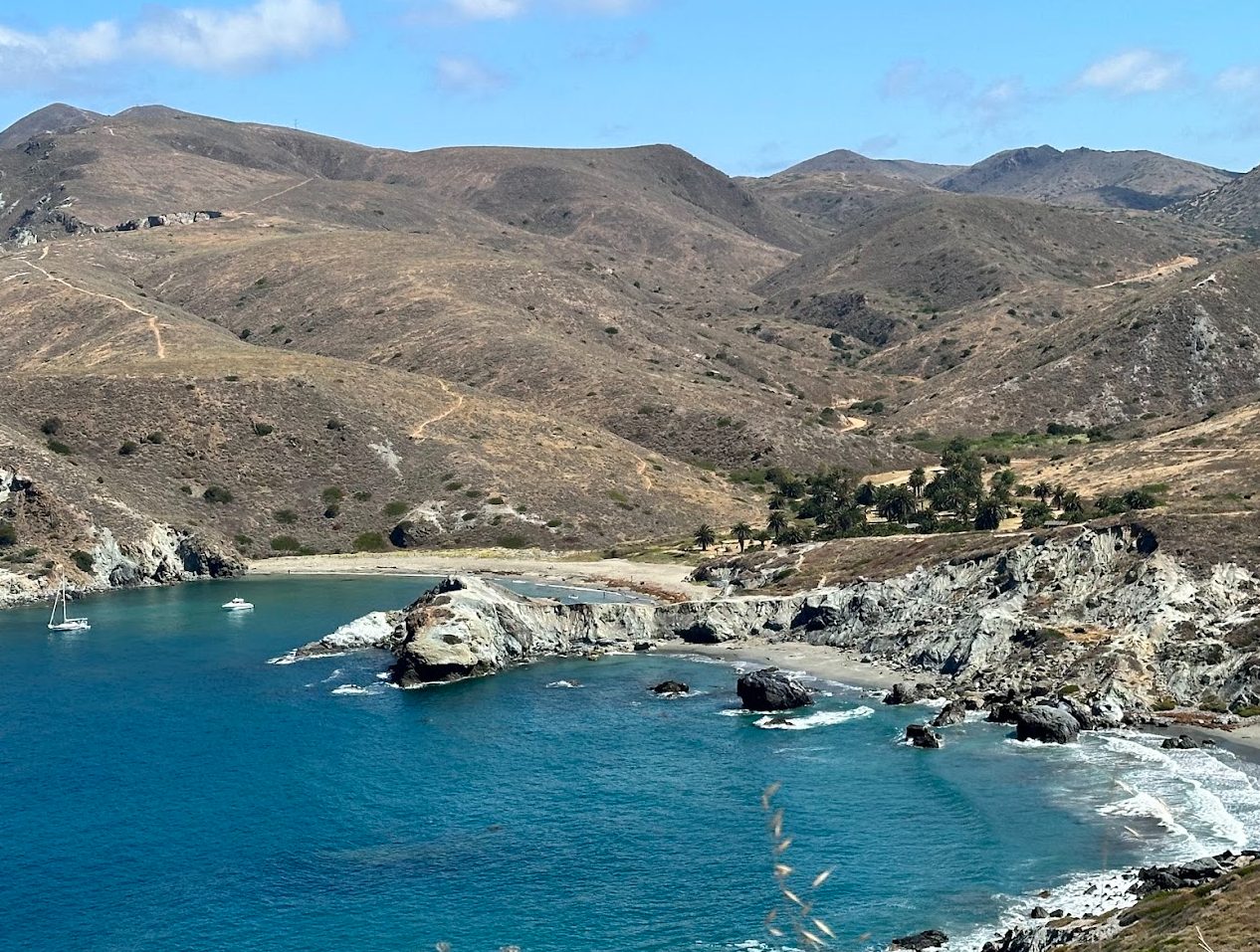
<em>Starting our adventure at the airport in the sky (photo by author’s husband)</em></p>

<p>And honestly? It was gorgeous: rolling hills, ocean views, bison, cacti.</p>

<p>Catalina was doing what Catalina does best. It was beautiful, painful, and humbling all at once.</p>

<p>The last time I had carried this much weight was on this exact same trail a year earlier.</p>

<p>My body remembered, every muscle cell remembered.</p>

<p>Near the end of the day, we let the boys run ahead. Yes, some of us were still capable of running.</p>

<p>My husband was still sleepwalking but somehow remained ahead of me.</p>

<p>That says… what it says.</p>

<p>Eventually we all reached Little Harbor.</p>

<p>I vaguely remember arriving, and crawling into the tent my husband had set up.</p>

<p>I vaguely remember sticking my head outside long enough to take a picture or two. The family roasted marshmallows.</p>

<p>I made a brief appearance at the porta-potty, brushed my teeth, and returned to bed.</p>

<p>I don’t think I’ve ever slept that well while camping.</p>

<p>My body had reached the point where sleep was no longer optional.</p>

<p>The next morning felt much better and we decided to… go on another hike, with only a light pack. We wandered up to an overlook above Shark Harbor, admired the scenery, and enjoyed a genuinely lovely morning.</p>

<p><img src="/assets/images/medium-what-could-possibly-go-wrong-backpacking-catalina-island-with-teens-3.jpg" alt="Little Harbor and Shark Harbor on Catalina Island (photo by author)" />
<em>Little Harbor and Shark Harbor on Catalina Island (photo by author)</em></p>

<p>Then my stomach started refusing the eternal trail food. My gut was unhappy. Very unhappy. I ended up making way too many trips to the camp porta-potties. I remember the days I used to run from them. That day, I was gratefully running towards them.</p>

<p>After lunch, the boys headed to Shark Harbor for a swim.</p>

<p>It lasted exactly fourteen seconds.</p>

<p>My younger son jumped into a wave, landed on a stingray, and immediately launched himself into his brother’s arms. His older brother carried him out of the water and offered him the only thing he had available to wipe the blood off his foot: his brand-new Catalina quick-dry souvenir shirt that I had bought the day before.</p>

<p>I couldn’t have been prouder.</p>

<p>The boys radioed us on their walkie-talkies to announce that May was apparently stingray mating season and asked us to bring the first aid kit. My younger one applied pressure on his wound, stayed calm, and together we made our way back to camp.</p>

<p>On the way, they told us that the foot needed to be soaked in hot water because, as they had learned during Junior Lifeguard training, stingray venom is a protein that denatures with heat. In other words, hot water would help decrease the pain.</p>

<p>So then began several hours of boiling water, soaking a foot, boiling more water, soaking a foot, boiling even more water, soaking said foot…</p>

<p>At one point we ran out of fuel.</p>

<p>A ranger came to our rescue with additional canisters.</p>

<p>So we boiled more water and soaked the foot some more.</p>

<p>Two hours later we boiled the last pot of water and played cards while the foot continued soaking.</p>

<p>As always, my younger son ended up being the Old Maid. This has become such a family tradition that if someone else loses, it doesn’t count. I no longer document alternative outcomes.</p>

<p>Eventually I decided it was time for a swim. I wore Crocs.</p>

<p>I wonder why I made that choice, because by then I had already secured a ride out with the rangers the next morning, and we did have extra fuel to make more hot water. Still, I wore the Crocs and only rinsed off quickly before running back to safety.</p>

<p>My husband and I returned to our tents and decided everyone needed a nap.</p>

<p>The squirrels had other plans.</p>

<p>While we slept, they launched a coordinated attack on our leftover food. Marshmallows were among the casualties. Our evening campfire treats were officially demolished.</p>

<p><img src="/assets/images/medium-what-could-possibly-go-wrong-backpacking-catalina-island-with-teens-4.jpg" alt="Squirrel trying to eat my trail food (photo by author)" />
<em>Squirrel trying to eat my trail food (photo by author)</em></p>

<p>The next morning, the ranger gave us a ride. With an injured foot, heavy backpacks, and an 11:45 ferry to catch, hiking another five or six miles seemed less like adventure and more like poor judgment.</p>

<p>We skipped what is arguably the most beautiful section of the trail. We told ourselves we’d be back for it next year, and that the island would have more adventures ready for us.</p>

<p>When we got to Two Harbors, we ordered breakfast. The plates arrived and within ten seconds the boys scarfed down my food, fiercely protecting theirs while circling mine like vultures waiting for another opportunity to strike.</p>

<p>I returned to the counter and re-ordered the exact same breakfast, complaining about my teenage boys behaving as if I hadn’t fed them anything but trail food for the last three days.</p>

<p>By the time we boarded the ferry home, all four of us had reached my husband’s contagious sloth energy level.</p>

<p>We all fell asleep across the table between us. To anyone walking by, we probably looked like survivors of a major wilderness expedition.</p>

<p>In reality, we had completed about nine miles of hiking, one stingray rescue, way too many bathroom visits, and a surprisingly large amount of foot soaking.</p>

<p>Catalina Round Three may not have gone according to plan, but it was memorable. We’ll be back, with some new trail food options and hopefully gear haul next time.</p>]]></content><author><name>Agnès Déglon-Fischer</name></author><category term="Misadventures" /><summary type="html"><![CDATA[The Trail, the Stingray, and the Porta-Potty]]></summary><media:thumbnail xmlns:media="http://search.yahoo.com/mrss/" url="https://adeglon.github.io/assets/images/medium-what-could-possibly-go-wrong-backpacking-catalina-island-with-teens-1.jpg" /><media:content medium="image" url="https://adeglon.github.io/assets/images/medium-what-could-possibly-go-wrong-backpacking-catalina-island-with-teens-1.jpg" xmlns:media="http://search.yahoo.com/mrss/" /></entry><entry><title type="html">Sacred and Scared in the South of France</title><link href="https://adeglon.github.io/sacred-and-scared-in-the-south-of-france/" rel="alternate" type="text/html" title="Sacred and Scared in the South of France" /><published>2026-05-07T05:30:28+00:00</published><updated>2026-05-07T05:30:28+00:00</updated><id>https://adeglon.github.io/sacred-and-scared-in-the-south-of-france</id><content type="html" xml:base="https://adeglon.github.io/sacred-and-scared-in-the-south-of-france/"><![CDATA[<p><em>Flying Across the World to Meet a Writer, a Group of Strangers… and Myself</em></p>

<p>I didn't go to the south of France for a vacation. I went because I couldn't not go.</p>

<p><img src="/assets/images/Screenshot-2026-05-06-10.07.59-PM.jpg" alt="" /></p>

<p>Ten months earlier, on a flight back from Europe, I had picked up <em>Kilomètre Zéro</em> by Maud Ankaoua, and it did something I wasn't expecting. Not only did it inspire me, but it gave me permission.</p>

<p>Permission to believe in the book I had been circling to write.</p>

<p>Permission to trust the voice inside me that had been longing to be expressed.</p>

<p>Permission to stop ignoring it and start feeling it.</p>

<p>So when one of my writing assignments — <em>follow an author, not just their work but their way of showing up in the world</em> — landed in front of me a few months later, I didn't have to think very long. I watched as Maud prepared to release her next book, <em>Tu m'avais promis.</em> I followed the posts, the energy, the presence.</p>

<p>And when I saw she offered in-person seminars at her home in the south of France, my husband looked at me and said one word.</p>

<p><em>"Go."</em></p>

<p>He made it possible and I am endlessly grateful.</p>

<p>As soon as I signed up, the internal work immediately began. Or, more accurately: the mind chatter kicked into full performance mode.</p>

<p>I had heard Maud say in an interview that during her seminars she asked participants to introduce themselves without using social labels or professional identities.</p>

<p>So there I was, on my daily morning walk with my Goldendoodle dragging me around the neighborhood, trying to figure out how on earth I was going to do that.</p>

<p>My monkey mind was doing what monkey minds do best.</p>

<p><em>How do you say you're a biochemist and an acupuncturist… without saying you're a biochemist and an acupuncturist?</em></p>

<p><em>"I'm a bunch of cells full of space and a bunch of meridians full of Qi?"</em></p>

<p>Ugh. No. Too nerdy.</p>

<p><em>"I'm a microcosm within a macrocosm?"</em></p>

<p>Absolutely not. Nobody is going to know what I'm talking about.</p>

<p>If I'm not a mom, scientist, wife, daughter, sister, friend… then what am I? Who am I?</p>

<p>That was exactly the question I had been circling in my book. The one I desperately wanted  and didn't want  to publish.</p>

<p>Ugh.</p>

<p><em>Come on. What's left underneath the labels?</em></p>

<p><em>"I'm a being who lives between two worlds, the scientific and the spiritual, between cultures, between languages, between translations, between Yin's earthly energy and Yang's heavenly energy…"</em></p>

<p>Hmm.</p>

<p>Maybe, but so abstract.</p>

<p>And underneath all those attempts, what I really wanted to say felt far too raw to speak out loud. That what mattered most to me was freedom, creative expression, honesty, humor, writing from the soul.</p>

<p>No. I could definitely not say that.</p>

<p>Too exposed.</p>

<p>All that and many other increasingly questionable versions spiraled through my head while my dog probably understood life much better than I did.</p>

<p>Little did I understand at this time that while I was managing my very enthusiastic Goldendoodle on one end of the leash, my own internal "poodle" — the monkey mind — had taken complete control of my end of the leash. (In French, Maud calls it the <em>caniche</em> — the poodle. Same creature. Different breed. Both bark. Both pull. Both need to be put on a leash, or as Maud would say, <em>envoyé à la niche</em> — sent back to its doghouse.)</p>

<p>I let the Goldendoodle off leash.</p>

<p>She moved through the world nose first, grounded by scent, grass, movement, instinct, while I wandered somewhere far above the trail in a cloud of possible and impossible scenarios, my <em>caniche</em> fully in charge.</p>

<h2 id="day-1--arrival"><strong>Day 1 — Arrival</strong></h2>

<p>A few months later I was boarding a plane from San Diego, slightly in disbelief, mildly questioning the reality of what was happening, but fully committed.</p>

<p>When I arrived, jet-lagged, exhausted, but exactly where I needed to be, someone I had never met in my life kindly offered to pick me up at my hotel.</p>

<p>It was a detour for her, technically an inconvenience. And yet she did it without hesitation.</p>

<p>That simple gesture, so natural for her, landed deeply for me. Before we had even started, something had already opened.</p>

<p>I met a group of strangers, each with their own path, their own reason for being there, and somehow, surprisingly quickly, they didn't feel entirely like strangers anymore.</p>

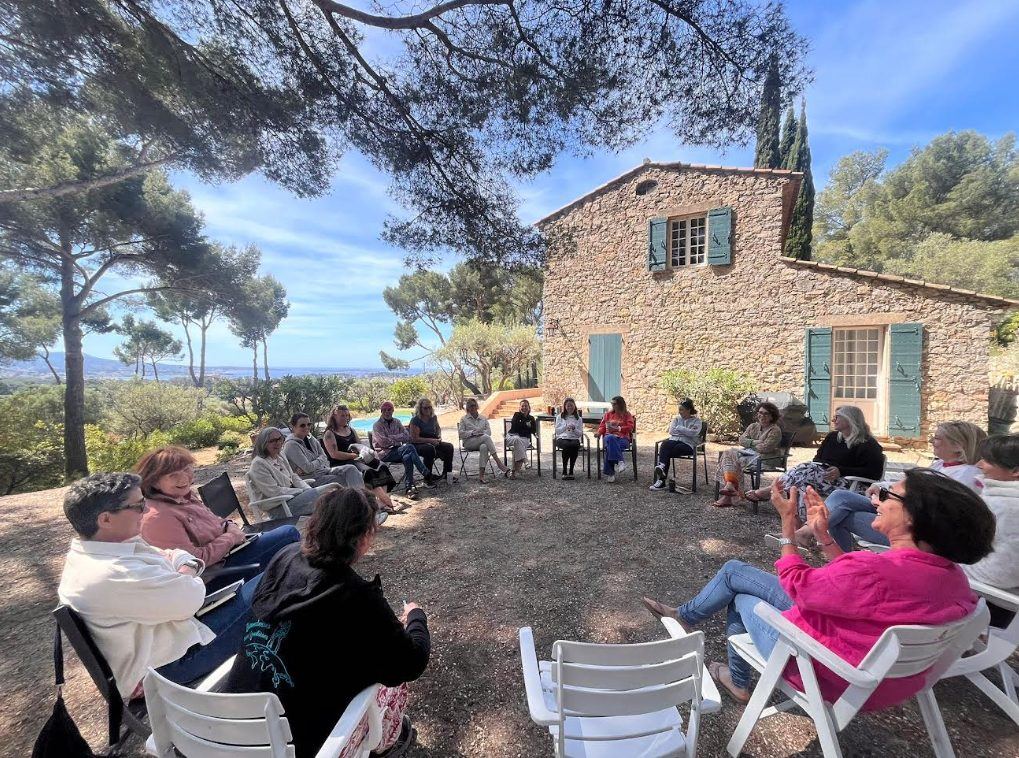
<p>We came from everywhere: France, Switzerland, Belgium, Canada, Brazil… and me, California. And yet, for those four days, our paths braided together.</p>

<p>We started with a walk that, on the surface, looked like a simple group walk. In reality it was a fragile and instant deep dive into the human core, a moment when a group of strangers tries to find themselves in a timeless bubble where everyday life and dream blur together, and everything lands a little deeper, with every step, every word, every breath.</p>

<p>Afterward we went back to Maud's home, and let me tell you, there's something slightly surreal about standing in the home of someone whose book quietly shifted your path by opening an existential doorway for you somewhere over the Atlantic.</p>

<p>At some point I noticed my mind had been quietly rehearsing how I would explain my presence there. <em>How do you justify flying across the world to attend a seminar with an author?</em></p>

<p>I tried a few versions in my head. None of them worked.</p>

<p>Because the truth was much simpler. I didn't come because it made sense in my mind. I came because it made sense in my entire being, because everything aligned in a way I couldn't ignore, because something in me recognized something in her work, because the path I had been trying to write about was suddenly right in front of me.</p>

<p>Not in a book. In real life.</p>

<h2 id="day-2--when-the-shell-starts-to-crack"><strong>Day 2 — When the Shell Starts to Crack</strong></h2>

<p>If Day 1 opened the door, Day 2 walked straight through it.</p>

<p>My first night of "rest" resembled approximately two and a half hours of sleep, generously sprinkled with jet lag, emotional overflow, and a brain that refused to power down. The next morning, I showed up with minimal sleep, maximum vulnerability, and a very shaky inner landscape.</p>

<p>Perfect conditions for an emotional storm.</p>

<p>Luckily, I didn't have to navigate it alone. Another participant staying at the same hotel had become my official ride-share-friend.</p>

<p>She didn't only share her car, we also shared the same sense of humor, which became very useful somewhere on the winding roads of the south of France when her phone dropped from its improvised GPS holder several times for every ride we did. </p>

<p>While driving, in the middle of a roundabout, she came to a temporary standstill.</p>

<p>At that exact moment my monkey mind became extremely active, nudging her to please move out of there. She remained perfectly calm, casually fishing her phone off the floor and searching for directions, while I stared directly into the increasingly confused eyes of the driver waiting to enter the roundabout to my right.</p>

<p>At that point in the seminar, I had not yet been trained to gaze deeply into another human being's soul, so I mostly focused on the whites of his eyes and insistently suggested to my driver that perhaps we continue moving before we collectively became one with French traffic. We also hadn't learned yet about controlling our monkey minds or keeping our barking poodles quiet.</p>

<p>As a reaction to my insistent pleas to move out of there, she looked at me with a grin and answered:</p>

<p><em>"Agnès… do you want to walk?"</em></p>

<p>We both burst out laughing. My monkey mind had barked. And hers had barked right back. But we didn't realize that yet. And the patient driver was a perfect example of holding his own on a tight leash.</p>

<p>By Day 3 she would become an anchor for me, one of my emotional support humans.</p>

<p>But let's finish Day 2 first, because I can hear Lydie's voice nudging me quietly to come back into the here and now.</p>

<p>• • •</p>

<p>On Day 2, the structure that Maud and Lydie had created really came to life.</p>

<p>It was a space where conversations went straight past the surface. Heart to heart. Human to human. The kind of exchanges that make you wonder why we spend years learning math, physics, and history before ever learning how to actually meet ourselves, and from that space, truly connect with others.</p>

<p>That's when we talked about dreams and about the hyperactivity of our minds. Real dreams, the ones we don't always say out loud. Real mind chatter, the one we too often say out loud. And so we practiced keeping our poodles under control, which was… partially unsuccessfully successful.</p>

<p>When it was my turn to share my dream, I said it.</p>

<p>My dream was to express myself through creative writing. To share the book I had in me.</p>

<p>But I was afraid of not being read.</p>

<p>And even more so, I was terrified of being read.</p>

<p>Lydie joined my two partners to gently help guide me through that space. My group was incredible — present, patient, trying to help me open something I was simultaneously desperate to open and equally determined to keep closed.</p>

<p>It's a very interesting kind of tension. Shaking from within and trying to hold it physically together on the outside. Wanting to be seen and wanting to hide at the exact same time.</p>

<p>That day shook me. Emotionally and physically.</p>

<p>The lack of sleep didn't help, or actually, maybe it did exactly what it needed to.</p>

<p>As Maud would say:</p>

<p><em>"Respire… le plan est toujours parfait." (Breathe… everything is unfolding perfectly.)</em></p>

<p>So I breathed. A lot. Mostly because life lasts longer, then to stay awake, and also to stay present.</p>

<p>• • •</p>

<p>In my childhood my mom had described me as a turtle without a shell. I had quickly figured out that I needed to build my own.</p>

<p>The turtle was my sensitivity. The shell was all the protections I had built around it. Protections that were supposed to help me function, but were also keeping that sensitivity hidden, contained, and controlled.</p>

<p>That day, something started to shift. The shell didn't fully open. But it was no longer completely sealed.</p>

<p>By the end of the day I was exhausted. I had barely held it together. And that's exactly how it needed to be.</p>

<h2 id="day-3--the-day-the-shell-cracked"><strong>Day 3 — The Day the Shell Cracked</strong></h2>

<p>I had finally slept a full night, which at that point felt like a small miracle. I woke up steady, calmer, no trembling inside.</p>

<p>I felt ready. Or so I thought.</p>

<p>Ready to participate. Ready to share, at least a little. I walked in with a big smile, genuinely looking forward to the day.</p>

<p>Little did I know what to expect.</p>

<p>That morning, during the teachings, I again struggled to find the courage to speak — to share a piece of what had been sitting inside me for years. The closer I came to speaking, the tighter the shell seemed to get. Safe. Contained.</p>

<p>As soon as the mind slipped back in with its familiar chatter, I would close everything again. I started circling.</p>

<p>Open. Close. Open. Close.</p>

<p>Like I was testing the edges of something I wasn't quite ready to fully step into.</p>

<p>When I finally spoke, the pressure relieved. My presence felt a bit forced, unnatural, a bit… ugh… but there was also a bit of pride. <em>I did it. Not perfectly, but I did.</em></p>

<p>In Traditional Chinese Medicine we say: <em>"Where there is free flow, there is no pain. Where there is no free flow, there is pain."</em> I finally let it flow a bit, and I told them exactly that.</p>

<p>• • •</p>

<p>Then came the afternoon.</p>

<p>We moved into a more experiential part of the seminar. And at some point I was  gently encouraged by someone I am now incredibly grateful to (thank you, Lydie) to step forward and get grilled by Maud.</p>

<p><em>Voluntold</em> might be the more accurate word, said with a big smile, because, hey…  didn't I sign up and pay for that?</p>

<p><img src="/assets/images/Screenshot-2026-05-06-10.17.22-PM.jpg" alt="" /></p>

<p>Suddenly I was in front of eighteen people, being asked a simple question that didn't feel simple at all.</p>

<p><em>Why was I holding the shell so tightly?</em></p>

<p><em>Why did my turtle, my sensitive, intuitive self, need such a thick shell?</em></p>

<p>I thought my shell was there to protect her. But maybe I wasn't protecting her. Maybe I was keeping her in the dark.</p>

<p>Maud guided me gently. Carefully. Patiently. She asked about that sensitivity I kept referring to. She questioned whether all those walls were still necessary.</p>

<p>I don't even remember her exact words. What I remember is what my mind translated:</p>

<p><em>Let go. Drop the shell. Now. In front of everyone.</em></p>

<p>The pressure built. Fast. Too fast.</p>

<p>She waited. Silence filled the space. A kind, patient silence, but still, silence.</p>

<p>Eighteen pairs of eyes. And me. Unable to move forward. Unable to find words. Unable to open that door.</p>

<p>And then, finally, from somewhere deep inside the pressure:</p>

<p><em>"I can't do it."</em></p>

<p>It came out shaky, barely audible, but it was true.</p>

<p>She nodded, gently, without pushing or forcing. Just a simple acknowledgment that I wasn't ready. And she moved on.</p>

<p>I stood up and walked away. I needed space to breathe, to release something that had nowhere else to go.</p>

<p>Then everything broke open. Not in words. In something much more raw. A flood that had been held back for a long time finally found a way through.</p>

<p>And in one of those quietly profound human moments, someone who had been a complete stranger less than 24 hours earlier was suddenly there, holding that space with me. No questions, no fixing, just presence… Thank you.</p>

<p>Lydie came and guided me into meditation. An invitation to gently approach what I had been holding so tightly. To bring a little light to it.</p>

<p>I could feel it. The treasure I had been protecting. So close.</p>

<p>And yet,  the knot in my throat held firm. My body knew. My mind made sure nothing came out.</p>

<p>What struck me most in that moment wasn't just what I couldn't access. It was how everyone around me responded. The care. The attention. The willingness to help me open something I couldn't open alone.</p>

<p>At one point, my emotional support human I had only known for two days sat with me and started asking me questions. Precise ones. Grounded ones. The kind that gently lead you somewhere without forcing you there. She had me write things down, step by step, almost like I had gone back to school, except this time, the subject was me.</p>

<p>That afternoon I shared more than I had before. But the core of it was still sealed.</p>

<p>And that night I went back to my room with it, still inside me, still held, and the real work began.</p>

<p>• • •</p>

<p>I didn't sleep much. Again. But this time it wasn't just jet lag.</p>

<p>My mind circled around it. Over and over. Catching glimpses of something it had always known. Moving between two states.</p>

<p>Sacred. Scared.</p>

<p>Soul space. Mind space.</p>

<p>Back and forth. Again and again.</p>

<p>And only when the mind finally let go, in the darkness, in the safety of being alone, what I was holding so tightly began to move.</p>

<p>Hesitantly. Carefully. Not yet ready to be spoken, but fully felt.</p>

<p>There is something inside me that wants to be expressed. Something I've held back and known for a long time. Something that is finally taking shape in the form of my book.</p>

<p>I think I finally caught a glimpse of how to write about it.</p>

<p>For here, for now, I do know this. I will keep showing up. I will keep trying. I will keep writing. Until, one day, what is still held finds its way into the open.</p>

<p>Because maybe that's the path. Not getting it right. But staying with it long enough for it to be expressed.</p>

<h2 id="day-4--soft-and-deep"><strong>Day 4 — Soft and Deep</strong></h2>

<p>By Day 4, the emotional intensity had somehow become both softer and deeper at the same time.</p>

<p>We had spent days together laughing, unraveling, crying, hugging, spiraling, breathing,  all while attempting to keep our internal poodles under control. Somewhere along the way, strangers had become something else entirely: hugging bodies, or, more accurately — buddies.</p>

<p>There were moments of gratitude, moments of silent recognition. We ended with what I described as speed dating for brief but intense declarations of appreciation — acknowledging what each person had brought into our lives during those few days — followed by moments of deep soul-level recognition staring into each other's eyes (not the white part this time) while allowing ourselves to be fully seen.</p>

<p>For a few brief moments, we had stepped outside the usual noise of everyday life. Outside the roles we cling to. Outside the constant mental narration. And what remained underneath was surprisingly simple.</p>

<p>Human beings wanting to feel seen, human beings wanting to feel loved, human beings wanting to matter to one another.</p>

<p>Once you spend several days dropping social masks, talking about dreams, fears, purpose, and inner worlds together, emotional collapse becomes a fairly reasonable and frequent group activity.</p>

<p>• • •</p>

<p>Somewhere between the breakthroughs and the collective soulful deep diving, we were also welcomed each day with beautiful French apéros and homemade meals lovingly prepared by our amazing hosts. They not only knew how to take us around the world through their cooking — they understood that our bodies, not just our souls, needed care, grounding, warmth, and pleasure.</p>

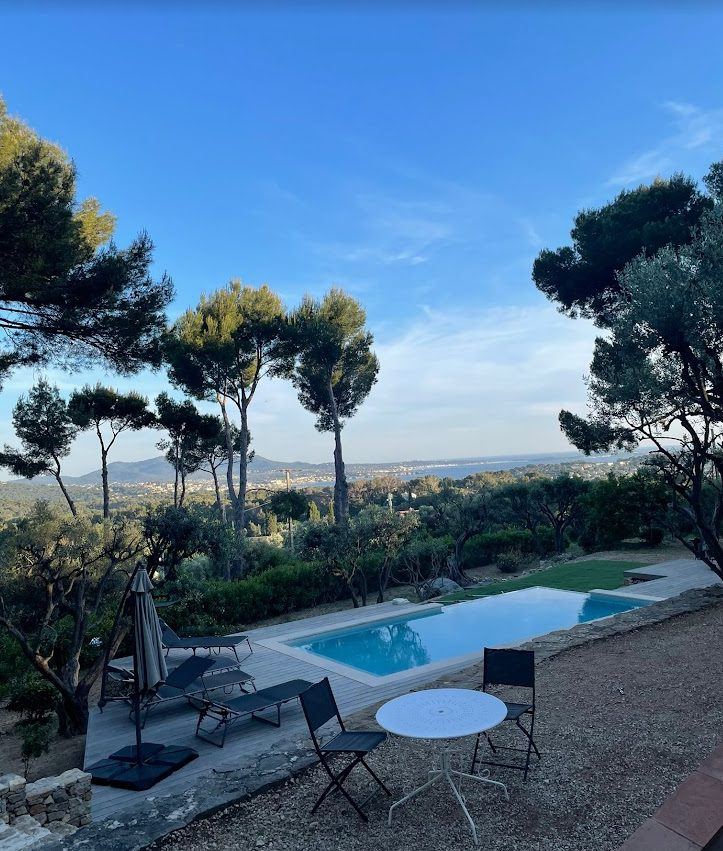
<p><img src="/assets/images/Screenshot-2026-05-06-10.37.37-AM.jpg" alt="" /></p>

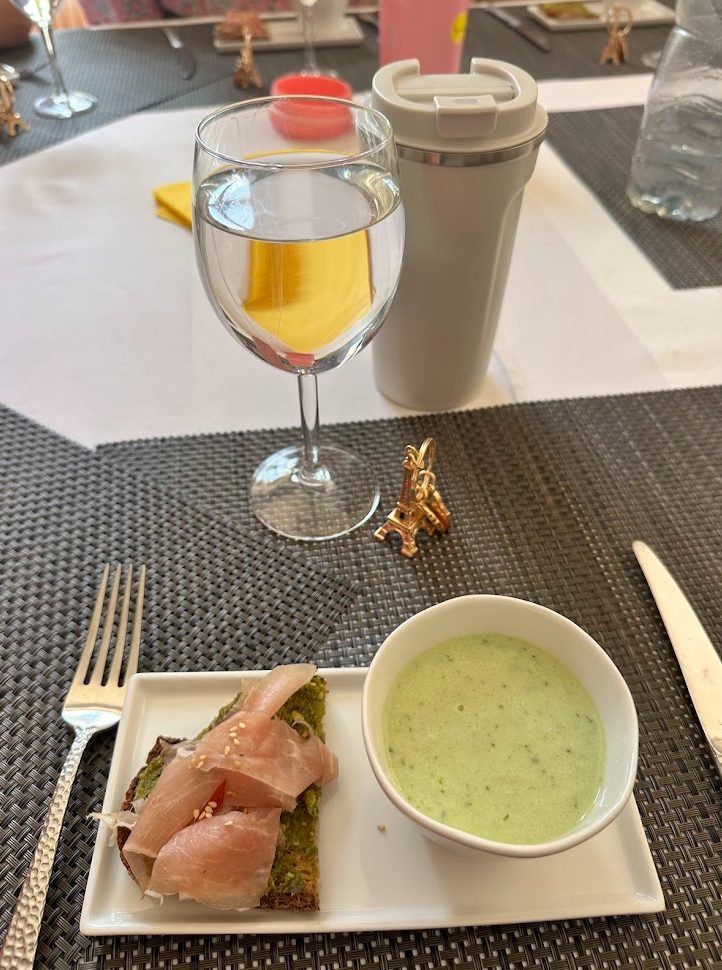
<p>Honestly, they understood something important about healing. Emotional vulnerability becomes much more sustainable when accompanied by excellent home cooked meals, French cheese, fresh bread, salami, good wine, and people gently placing dessert in front of you shortly after you finish crying.</p>

<p>• • •</p>

<p>We returned to our respective worlds with open hearts and the sudden urge to let everyone know how much we loved them.</p>

<p>Honestly, after flying back across the world to my side of it, I realized I had the easier cultural adjustment. In America, a casual <em>"love ya!"</em> doesn't immediately expose that you just came back from a highly concentrated French experience in collective soul-searching and emotional openness. My European friends, however, would have a much harder time justifying an accidental <em>"je t'aime"</em> slipping into the middle of a work meeting.</p>

<p>That said — after spending a week hugging instead of giving two kisses on the cheek to my new European friends, I found myself in awkward situations accidentally greeting Americans with European cheek kisses instead.</p>

<p>• • •</p>

<p>To those of you who showed me how to let things flow.</p>

<p>To the ones who caught me when I cracked open.</p>

<p>To the ones who cried on my shoulder, and the ones whose shoulders quietly held me in return.</p>

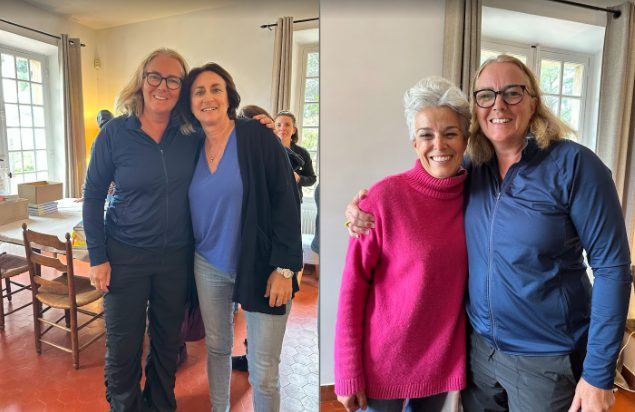
<p>To Maud and Lydie, who guided us through this deeply human experience with generosity, humor, kindness, and heart — thank you.</p>

<p>Thank you for opening a door for all of us. And thank you for reminding us that sometimes the path back to ourselves begins simply, by allowing ourselves to be seen.</p>

<p><img src="/assets/images/Screenshot-2026-05-06-9.42.40-PM.jpg" alt="" /></p>

<p>I came home from the south of France with the book still inside me. But something had shifted. The shell had cracked. And I know, with more certainty than I did before, that I will keep showing up. I will keep walking, because the path is the goal. And my path now ran straight through the French riviera, across the Atlantic, and back to my desk.</p>

<p><em>For my French-speaking friends curious to experience a little of this journey for themselves: https://www.maud-ankaoua.com/seminaires.php</em></p>]]></content><author><name>Agnès Déglon-Fischer</name></author><category term="Soul&amp;Self" /><summary type="html"><![CDATA[Flying Across the World to Meet a Writer, a Group of Strangers… and Myself]]></summary><media:thumbnail xmlns:media="http://search.yahoo.com/mrss/" url="https://adeglon.github.io/assets/images/featured-sacred-and-scared-in-the-south-of-france.jpg" /><media:content medium="image" url="https://adeglon.github.io/assets/images/featured-sacred-and-scared-in-the-south-of-france.jpg" xmlns:media="http://search.yahoo.com/mrss/" /></entry><entry><title type="html">Menopause Isn’t a Malady — It’s a Turning Tide</title><link href="https://adeglon.github.io/menopause-isnt-a-malady-its-a-turning-tide/" rel="alternate" type="text/html" title="Menopause Isn’t a Malady — It’s a Turning Tide" /><published>2025-11-21T18:59:48+00:00</published><updated>2025-11-21T18:59:48+00:00</updated><id>https://adeglon.github.io/menopause-isnt-a-malady-its-a-turning-tide</id><content type="html" xml:base="https://adeglon.github.io/menopause-isnt-a-malady-its-a-turning-tide/"><![CDATA[<p>I used to find words easily, whether in English, French, or German. If one language failed me, another one would usually offer the missing word. But lately, they weren’t just hiding in another tongue. They were gone. I could sense them hovering just out of reach, their shape and texture clear in my mind, only to watch them dissolve before I could speak.</p>

<p>As a biochemist, I had studied hormonal cycles, including their decline during menopause, in the tidy way textbooks present them: bullet points, neat charts, predictable stages. I thought I understood it. But when my turn came to step into that terrain, nothing about it was tidy. The theories I’d memorized became flesh and bone, my own flesh and bone, and I realized how little those diagrams had prepared me for the lived experience.</p>

<p>Later in life, when I discovered Traditional Chinese Medicine (TCM), something clicked. Through that lens, menopause isn’t a malfunction or a decline. It’s a seasonal shift in the body, a turning tide, a redirection of energy. And that changed everything for me.</p>

<h2 id="different-cultures-different-menopauses">Different Cultures, Different Menopauses</h2>

<p>In conversations with other women in midlife, I’ve noticed a pattern. They talk about menopause the way one might read a medical chart: hot flashes, brain fog, sleepless nights, joint pain, weight gain. There’s a sense of resignation in their voices, as if their identity has been replaced by a checklist of discomforts. Many speak of “getting through it” the way you’d get through the flu, they endure it, medicate it, wait for it to pass. Rarely is there space to imagine it as anything but an interruption to life, let alone as a stage that might hold its own purpose or beauty.</p>

<p>The truth is, symptoms vary across cultures: in the U.S., around 80% of women report hot flashes; on the Yucatán Peninsula, almost none do. In parts of Asia, frozen shoulder is so common during menopause that it’s considered a main symptom.</p>

<p>I remember learning this in acupuncture school and being stunned. If symptoms can differ so much depending on where you live, then lifestyle, environment, and cultural framing clearly play a huge role. Menopause is not a fixed sentence. It can shift. We can shift.</p>

<h2 id="the-seventh-seven-an-ancient-map-of-womens-lives">The Seventh Seven: An Ancient Map of Women’s Lives</h2>

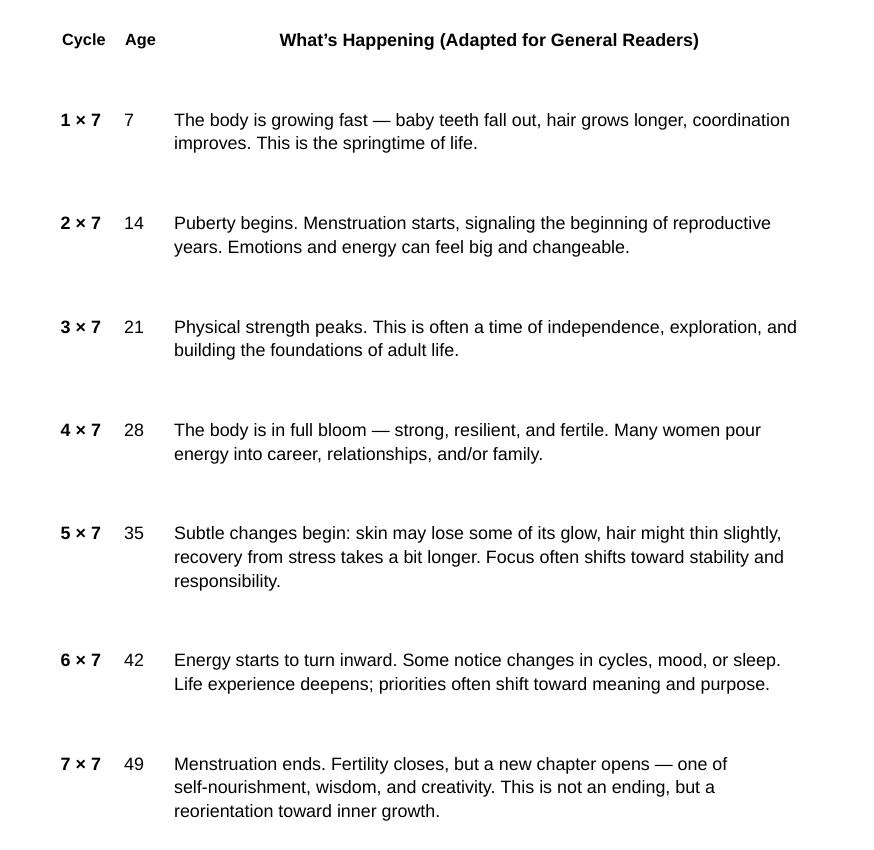
<p>In the <em>Huangdi Neijing</em>, the foundational text of Chinese medicine, women’s lives are described in cycles of seven years. They corresponds to transitions like puberty, motherhood, and menopause, but there are more. And for menopause, at “seven times seven,” around age forty-nine, it says:</p>

<p>The <em>tian gui</em>, reproductive essence, dries, and the body’s great rivers, the Chong and Ren channels, begin to ebb. Fertility ends. This is not framed as a failure, but as the next stage in a lifelong rhythm. In Daoist thought, this is <em>fan</em> (返), the return, the reversal, the inevitable shift of energy back toward its source.</p>

<p><img src="https://miro.medium.com/v2/resize:fit:1138/1*OUU25n5ZyGsKse5DCKAkwg.png" alt="" /></p>

<h2 id="how-acupuncture-supports-you-through-menopause"><strong>How Acupuncture Supports You Through Menopause</strong></h2>

<p>Menopause is often described through symptoms: hot flashes, anxiety, joint pain, sleep disturbances, brain fog.<br />
But beneath those symptoms is a complex hormonal shift, and a very different story depending on whether you’re looking through the lens of Western physiology or Traditional Chinese Medicine (TCM).</p>

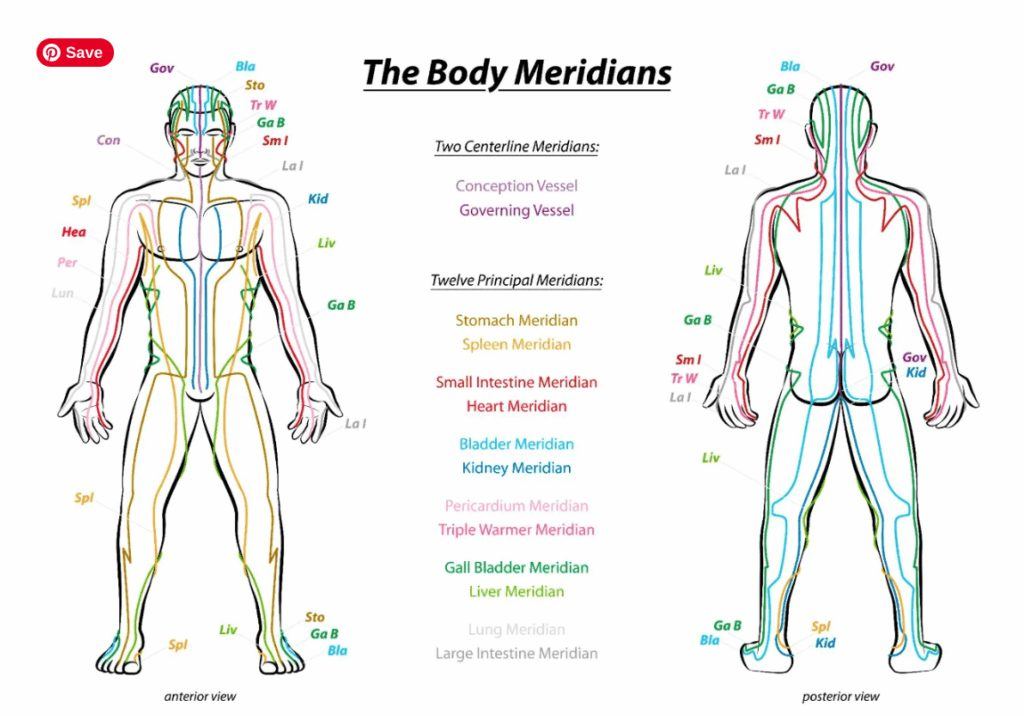
<p>Acupuncture regulates the nervous system and hormonal pathways (modern science), and it restores balance to Qi, Blood, Yin, and Yang (TCM).</p>

<p>In TCM, menopause isn’t a failure of the body.<br />
It’s a <strong>transition point</strong> where certain systems naturally weaken, others overwork to compensate, and the entire internal landscape shifts into a new rhythm.</p>

<p>Acupuncture helps the body make that transition with more stability, resilience, and comfort.</p>

<p>Let’s break down how it works in a way that makes sense to Western patients, and what you can do at home to support the process.</p>

<h2 id="1-how-acupuncture-helps-biologically"><strong>1. How Acupuncture Helps Biologically</strong></h2>

<p>Acupuncture doesn’t “add hormones.” It helps the <strong>systems</strong> that regulate your hormones function more smoothly.</p>

<h4 id="-it-calms-the-stress-response"><strong>• It calms the stress response</strong></h4>

<p>High cortisol makes everything worse, sleep, hot flashes, anxiety, and belly weight.<br />
Acupuncture switches your body out of fight-or-flight and into rest-repair mode, where healing and hormone regulation happen.</p>

<h4 id="-it-steadies-the-autonomic-nervous-system"><strong>• It steadies the autonomic nervous system</strong></h4>

<p>This is the system that controls body temperature, night sweats, heart rate, and digestion.<br />
Acupuncture improves temperature stability and reduces the intensity of hot flashes.</p>

<h4 id="-it-reduces-inflammation"><strong>• It reduces inflammation</strong></h4>

<p>Lower estrogen → higher inflammation → joint pain, stiffness, migraines.<br />
Acupuncture lowers inflammatory markers and improves blood flow, which is why many women feel:</p>

<p>“My knees hurt less and my mind feels clearer.”</p>

<h4 id="-it-improves-sleep-quality"><strong>• It improves sleep quality</strong></h4>

<p>Many menopausal symptoms become manageable <em>once sleep improves</em>.<br />
Acupuncture helps regulate sleep cycles, especially the 2–3 AM wakeups connected to hormonal changes.</p>

<p><img src="/assets/images/Screenshot-2025-11-21-11.00.32-AM.jpg" alt="" /></p>

<h2 id="2-the-four-major-tcm-patterns-behind-menopause-symptoms"><strong>2. The Four Major TCM Patterns Behind Menopause Symptoms</strong></h2>

<p>Western women often think of menopause as one thing.<br />
TCM sees different possible underlying patterns, each with its own symptom profile.</p>

<p>You may recognize yourself in one or two of these.</p>

<p>Importantly:<br />
These are not “diseases.” They are descriptions of how your internal systems are functioning.**<br />
** Think of them as the body’s “operational settings.”</p>

<p>For each pattern, I’ll give simple lifestyle practices that support the acupuncture process.</p>

<h3 id="pattern-1-kidney-yin-deficiency"><strong>Pattern 1: “Kidney Yin Deficiency”</strong></h3>
<p>(<strong>The Overheated, Dry, Wired Pattern</strong>)</p>

<h4 id="how-it-feels-in-western-terms"><strong>How it feels (in Western terms):</strong></h4>

<ul>
  <li>Hot flashes and night sweats</li>
  <li>Dry skin, dry eyes, vaginal dryness</li>
  <li>Waking up at 2–3 AM</li>
  <li>Anxiety or irritability</li>
  <li>Low back or knee ache</li>
  <li>Feeling “tired but wired”</li>
</ul>

<p>In TCM, “Yin” represents your cooling, nourishing, moistening, stabilizing resources.<br />
When Yin is low, your <strong>nervous system overheats</strong>, leading to heat waves, dryness, and restless sleep.</p>

<h3 id="lifestyle-support"><strong>Lifestyle support:</strong></h3>

<p><strong>Eat cooling, hydrating foods:</strong></p>

<ul>
  <li>cucumber, watermelon, berries</li>
  <li>tofu, mung beans</li>
  <li>cooked greens</li>
  <li>soups and broths</li>
</ul>

<p><strong>Reduce internal heat triggers:</strong></p>

<ul>
  <li>alcohol</li>
  <li>caffeine</li>
  <li>spicy foods</li>
  <li>late-night eating</li>
  <li>over-exercising</li>
</ul>

<p><strong>Build Yin through rest:</strong></p>

<ul>
  <li>earlier bedtime</li>
  <li>restorative yoga</li>
  <li>slower, longer walks</li>
  <li>breathwork before sleep</li>
</ul>

<p>This pattern responds beautifully to acupuncture, especially for sleep and night sweats.</p>

<h3 id="pattern-2-kidney-yang-deficiency"><strong>Pattern 2: “Kidney Yang Deficiency”</strong></h3>
<p><strong>(The Cold, Sluggish, Low-Motivation Pattern</strong>)</p>

<h4 id="how-it-feels"><strong>How it feels:</strong></h4>

<ul>
  <li>Cold hands and feet</li>
  <li>Low energy</li>
  <li>Slow metabolism or weight gain</li>
  <li>Fluid retention</li>
  <li>Low mood, low motivation</li>
  <li>Waking up tired</li>
</ul>

<p>“Yang” in TCM is your metabolic spark, your warmth, drive, and vitality.<br />
When Yang is low, everything feels like it’s moving through molasses.</p>

<h4 id="lifestyle-support-1"><strong>Lifestyle support:</strong></h4>

<p><strong>Warm, cooked foods:</strong></p>

<ul>
  <li>oatmeal, soups, roasted vegetables</li>
  <li>ginger tea, cinnamon</li>
  <li>mild warming spices</li>
</ul>

<p><strong>Gentle strength-building exercise:</strong></p>

<ul>
  <li>hill walking</li>
  <li>slow strength training</li>
  <li>core stability and balance</li>
</ul>

<p><strong>Protect your warmth:</strong></p>

<ul>
  <li>avoid cold smoothies in the morning</li>
  <li>keep feet and lower back warm</li>
  <li>avoid sitting on cold surfaces</li>
</ul>

<p>This pattern often improves metabolism, energy, and morning fatigue with acupuncture.</p>

<h3 id="pattern-3-liver-qi-stagnation"><strong>Pattern 3: “Liver Qi Stagnation”</strong></h3>
<p><strong>(The Mood, Stress, and Sleep Rollercoaster</strong>)</p>

<h4 id="how-it-feels-1"><strong>How it feels:</strong></h4>

<ul>
  <li>Irritability</li>
  <li>Mood swings</li>
  <li>Feeling “tense inside” or overwhelmed</li>
  <li>PMS-like symptoms even without a cycle</li>
  <li>Digestive issues when stressed</li>
  <li>Waking 2–3 AM</li>
  <li>Migraines or tight shoulders</li>
</ul>

<p>The Liver in TCM regulates emotional flow, stress processing, and smooth movement of energy throughout the body.<br />
When it’s stuck, stress amplifies all menopausal symptoms.</p>

<h4 id="lifestyle-support-2"><strong>Lifestyle support:</strong></h4>

<p><strong>Move gently but often:</strong></p>

<ul>
  <li>20–30 minutes of walking</li>
  <li>dancing</li>
  <li>yoga flow</li>
  <li>anything that lets the body move rhythmically</li>
</ul>

<p><strong>Eat stress-friendly foods:</strong></p>

<ul>
  <li>leafy greens</li>
  <li>citrus</li>
  <li>mint</li>
  <li>chamomile</li>
  <li>cruciferous vegetables (support detox pathways)</li>
</ul>

<p><strong>Create daily emotional outlets:</strong></p>

<ul>
  <li>journaling</li>
  <li>talking with a friend</li>
  <li>creative expression</li>
  <li>breathwork or tapping</li>
</ul>

<p>This pattern is the one most tied to emotional symptoms, and also the fastest to improve with acupuncture.</p>

<h3 id="pattern-4-phlegm-damp-accumulation"><strong>Pattern 4: “Phlegm-Damp Accumulation”</strong></h3>
<p><strong>(The Brain Fog + Weight + Sluggish Digestion Pattern</strong>)</p>

<h4 id="how-it-feels-2"><strong>How it feels:</strong></h4>

<ul>
  <li>Weight gain around the midsection</li>
  <li>Foggy thinking</li>
  <li>Low energy</li>
  <li>Bloating or slow digestion</li>
  <li>Fluid retention</li>
  <li>Feeling “heavy” or unmotivated</li>
</ul>

<p>In TCM, this pattern is about <strong>metabolic slowdown</strong> and the body struggling to transform fluids and nutrients efficiently.</p>

<h4 id="lifestyle-support-3"><strong>Lifestyle support:</strong></h4>

<p><strong>Light, clean, whole foods:</strong></p>

<ul>
  <li>vegetables</li>
  <li>lean proteins</li>
  <li>soups instead of creamy foods</li>
  <li>avoid heavy, greasy meals</li>
</ul>

<p><strong>Reduce dampness-producing foods:</strong></p>

<ul>
  <li>excessive dairy</li>
  <li>sugar</li>
  <li>fried foods</li>
  <li>too many raw foods (they weaken digestion)</li>
</ul>

<p><strong>Add metabolism-friendly movement:</strong></p>

<ul>
  <li>brisk walking</li>
  <li>short intervals</li>
  <li>strength training</li>
  <li>anything that gets lymph moving</li>
</ul>

<p>Acupuncture helps clear the “stuckness,” lift fog, and stabilize weight.</p>

<h2 id="3-why-acupuncture-helps-so-many-menopausal-symptoms-at-once"><strong>3. Why Acupuncture Helps So Many Menopausal Symptoms at Once</strong></h2>

<p>Most Western treatments isolate symptoms:</p>

<ul>
  <li>something for sleep</li>
  <li>something for anxiety</li>
  <li>something for hot flashes</li>
  <li>something for pain</li>
</ul>

<p>But menopause isn’t a collection of separate problems, it’s <strong>a whole-body transition</strong>.</p>

<p>Acupuncture works because it:</p>

<ul>
  <li>supports the nervous system</li>
  <li>calms the stress response</li>
  <li>improves circulation</li>
  <li>strengthens digestion</li>
  <li>regulates sleep cycles</li>
  <li>reduces inflammation</li>
  <li>restores internal balance</li>
</ul>

<p>When these systems steady, many symptoms naturally ease, not just one.</p>

<h2 id="4-the-tcm-view-menopause-as-a-second-spring"><strong>4. The TCM View: Menopause as a ‘Second Spring’</strong></h2>

<p>In TCM, menopause is called <strong>the Second Spring</strong>, not an ending, but a beginning.<br />
A time when the body shifts away from fertility and toward creativity, purpose, wisdom, and strength.</p>

<p>Acupuncture supports that transformation so the transition feels:</p>

<ul>
  <li>smoother</li>
  <li>more grounded</li>
  <li>less chaotic</li>
  <li>more empowering</li>
</ul>

<p>Your body isn’t breaking down, it’s reorganizing itself.</p>

<p>And with the right support, that reorganization can feel like a renewal.</p>]]></content><author><name>Agnès Déglon-Fischer</name></author><category term="Health&amp;Science" /><summary type="html"><![CDATA[I used to find words easily, whether in English, French, or German. If one language failed me, another one would usually offer the missing word. But lately, they weren’t just hiding in another tongue. They were gone. I could sense them hovering just out of reach, their shape and texture clear in my mind, only to watch them dissolve before I could speak.]]></summary><media:thumbnail xmlns:media="http://search.yahoo.com/mrss/" url="https://adeglon.github.io/assets/images/featured-menopause-isnt-a-malady-its-a-turning-tide.jpg" /><media:content medium="image" url="https://adeglon.github.io/assets/images/featured-menopause-isnt-a-malady-its-a-turning-tide.jpg" xmlns:media="http://search.yahoo.com/mrss/" /></entry><entry><title type="html">Orienteering in the Anza Borrego Desert: The Ultimate Navigation Challenge</title><link href="https://adeglon.github.io/orienteering-in-the-anza-borrego-desert-the-ultimate-navigation-challenge/" rel="alternate" type="text/html" title="Orienteering in the Anza Borrego Desert: The Ultimate Navigation Challenge" /><published>2025-09-05T22:19:59+00:00</published><updated>2025-09-05T22:19:59+00:00</updated><id>https://adeglon.github.io/orienteering-in-the-anza-borrego-desert-the-ultimate-navigation-challenge</id><content type="html" xml:base="https://adeglon.github.io/orienteering-in-the-anza-borrego-desert-the-ultimate-navigation-challenge/"><![CDATA[<h2 id="a-race-through-open-terrain-and-slot-canyons">A Race Through Open Terrain and Slot Canyons<a href="https://medium.com/@agnes.deglon?source=post_page---byline--a348ec6f99b1---------------------------------------"></a></h2>

<p>Orienteering is always an adventure, but when you take it to the vast, open landscapes of the Anza Borrego Desert, it becomes something entirely different: a test of strategy, endurance, and navigation where both your brain and legs get a serious workout.</p>

<p>We signed up for two of the four events at the San Diego Orienteering Festival, each offering its own unique challenges. One tested our speed and strategy in an open desert, the other had us navigate a twisting slot canyon and a featureless plain. Both left us exhausted, thrilled, slightly sun-baked, mildly dehydrated, and more emotionally attached to our compasses than ever before.</p>

<p><img src="/assets/images/13C5A7lEfsl03bzHjad4j8g.jpg" alt="Anza Borrego Desert - Sea of Silence" /></p>

<h2 id="day-1-the-adventure-trek-where-the-desert-is-silent">Day 1: The Adventure Trek, Where the Desert is Silent</h2>

<p>The first event was the Adventure Trek, a mass-start course designed for strategy and speed. But before the real action began, there was a warm-up: a two-kilometer walk from the event headquarters down to the actual starting point. That’s where I feel I should have earned a few extra points. Everyone ahead of me walked right past the start and straight into the wild unknown. I could’ve let them keep marching off into the desert like confident little lemmings, but I called them back, mainly because my husband and older son were two of them.</p>

<p>Everyone else who arrived afterward just followed the crowd already gathered at the right spot. But let’s be clear: I was the original lemming. If anyone deserved bonus points, it was me.</p>

<p>Not that it would’ve helped much, there were some true desert orienteering wizards out there who could practically smell control points from 500 meters away.</p>

<h3 id="into-the-sea-of-silence">Into the Sea of Silence</h3>

<p>Shortly before noon, about 170–200 participants gathered at the starting line, with maps and compasses in hand. At exactly 12:00 PM, we took off, sprinting down a dirt road and into what they called the Sea of Silence, a vast, open space of sand and scattered brush with a few hills and rocks here and there.</p>

<p>With very little man-made structure in sight, it was all about map, compass, and calculated guessing. Fortunately, a few dirt roads provided some reference points; otherwise, it was just miles of nothingness and the occasional sinking feeling that you might not be where you think you are, sometimes quite literally, as your foot disappeared into a hole left by a very ambitious desert bunny.</p>

<h3 id="strategy-lemmings-and-bunny-holes">Strategy, Lemmings, and Bunny Holes</h3>

<p>The course had 24 control points, each worth 1 to 5 points based on difficulty and distance. We had two hours to collect as many as we could. Go too far and you waste time; play it too safe and you miss the big points.</p>

<p>Our family split up. My husband and kids bolted off with boundless energy, while I took a more measured approach, step counting, visual cues, and an ongoing awareness that the desert is basically a minefield of bunny-sized ankle traps.</p>

<p>Thankfully, the control points weren’t hidden, you could spot their bright orange-and-white markers if you looked carefully. And if not? Sometimes the best tool is just following the crowd, because if a group of lemmings is running toward something, they’ve either found it… or are about to get very lost together. Either way, that’s strategy.</p>

<p>Then there were the pros, the ones who seemed to glide across the sand like it was a treadmill set to “cruise,” spotting control points from way off in the distance. No sinkholes for them. Just speed, precision, and unnaturally stable ankles.</p>

<h3 id="the-dust-trail-escape-plan">The Dust Trail Escape Plan</h3>

<p>Toward the end, my husband and kids almost lost each other, and missed the cutoff time by a few minutes. They came in with a group of others, and racked up some penalty points. At one point, I heard them over the walkie-talkies trying to navigate their way back, and let’s just say their conversation was… less than calming from a mom’s perspective. Thankfully, I heard my husband tell them to “follow the dust trail” of a car that had just passed me on the dirt road. That oddly specific instruction was, bizarrely, the most reassuring thing I’d heard all day.</p>

<h2 id="day-2-the-maze-middle-course">Day 2: The Maze Middle Course</h2>

<p>The next morning brought a completely different kind of challenge. the <em>Maze Middle</em>, set among Anza Borrego’s stunning slot canyons. Unlike the chaotic mass start of Day 1, this event had staggered start times, with racers heading out every two minutes.</p>

<p><img src="/assets/images/0pOf8AG3aDVPZfLhH.jpg" alt="Maze Middle Course — Slot canyon" /></p>

<p>I started first in our family but was quickly overtaken by both of my boys. My husband made sure I didn’t get permanently lost in the canyons, but once we hit the open terrain, they vanished again like desert mirages.</p>

<p>Courses were divided by difficulty: white and yellow for beginners, and orange, brown, green, red, and blue increasing in complexity. We picked orange, challenging but still manageable. One added twist: not every checkpoint was for your course, so even spotting a control point didn’t guarantee it was the right one. You had to check the number and stay focused.</p>

<h3 id="into-the-maze">Into the Maze</h3>

<p>The first five control points were tucked inside the slot canyons, a twisting labyrinth of narrow rock walls, steep drops, and sharp turns. Some trails helped, but overall, it was a game of precision. Unlike the open desert, where you could spot markers from a distance, here it was all about quick map reading and trusting the terrain.</p>

<p>Once out of the canyon, the course opened up again. Navigation shifted back to long compass bearings and careful pacing. It was just me, my map, my step count… and the hope I wasn’t slowly drifting into a parallel course.</p>

<h3 id="point-bathroom">Point Bathroom</h3>

<p>Somewhere between control points 6 and 7, I spotted a tiny black square on my map, a bathroom, standing proudly in the middle of absolutely nowhere.</p>

<p>Forget strategy. Forget points. Forget step calculations. This was now the most important landmark in my orienteering career.</p>

<p>I marched toward it with purpose… only to find a line. Where had all these people come from? And why did they all suddenly need to pee in the middle of <em>my</em> race? Not ideal. Standing still during a race usually isn’t part of the plan.</p>

<p>Oh well. Mission accomplished, I rejoined the course, slightly lighter, slightly behind, and a whole lot more motivated.</p>

<h3 id="point-9-my-nemesis">Point 9, My Nemesis</h3>

<p>One of the toughest parts of orienteering is second-guessing yourself. Just because you’re heading the right way doesn’t mean it <em>feels</em> right. And the temptation to check every post you see? A fast-track to total disorientation.</p>

<p>Point 9 should have been straightforward, but I kept spotting nearby posts and checking them. Not mine. Again. Not mine. Eventually, I had completely lost track of where I was. What should’ve taken five minutes turned into a 30-minute wandering session, with increasing doubt and decreasing dignity.</p>

<p>Meanwhile, my kids had already finished, probably inhaling snacks and debating their favorite control points while I was still out there, wondering how I had spent this much time wandering this much space.</p>

<p>When I finally found point 9, I didn’t know whether to cheer, cry, or apologize to it. I punched the e-stick like it had personally betrayed me and trudged off to the final two points and the finish line.</p>

<h3 id="the-final-takeaway">The Final Takeaway</h3>

<p>Orienteering challenges both body and brain. It forces you to think on your feet, problem-solve under pressure, and stay calm when you’re halfway convinced you’re lost forever.</p>

<p>But when you get to do it in a place as wild and beautiful as the Anza Borrego Desert, all the sore legs, dusty clothes, and humbling detours somehow turn into part of the joy.</p>

<p>Would I do it again? Absolutely.<br />
Would I train more next time? Yes, and hydrate more too.<br />
Would I try to beat my kids? Let’s not get carried away.</p>]]></content><author><name>Agnès Déglon-Fischer</name></author><category term="Misadventures" /><summary type="html"><![CDATA[A Race Through Open Terrain and Slot Canyons]]></summary><media:thumbnail xmlns:media="http://search.yahoo.com/mrss/" url="https://adeglon.github.io/assets/images/featured-orienteering-in-the-anza-borrego-desert-the-ultimate-navigation-challenge.jpg" /><media:content medium="image" url="https://adeglon.github.io/assets/images/featured-orienteering-in-the-anza-borrego-desert-the-ultimate-navigation-challenge.jpg" xmlns:media="http://search.yahoo.com/mrss/" /></entry><entry><title type="html">The Reality of a Family Ski Trip</title><link href="https://adeglon.github.io/the-reality-of-a-family-ski-trip/" rel="alternate" type="text/html" title="The Reality of a Family Ski Trip" /><published>2025-09-04T22:26:30+00:00</published><updated>2025-09-04T22:26:30+00:00</updated><id>https://adeglon.github.io/the-reality-of-a-family-ski-trip</id><content type="html" xml:base="https://adeglon.github.io/the-reality-of-a-family-ski-trip/"><![CDATA[<h2 id="a-swiss-tradition-thats-non-negotiable"><a href="https://medium.com/@agnes.deglon?source=post_page---byline--b0d422a8be01---------------------------------------"></a><strong>A Swiss Tradition That’s Non-Negotiable</strong></h2>

<p>Every winter, we pack up our lives for a week and embark on a journey that defies all logic, especially to a Swiss mind. Driving 6–9 hours to Mammoth for our skiing fix is not just a trip, it’s a necessity for us as SoCal Swiss. Snow is in our DNA. Sure, back in Switzerland, we could cross the Alps three times in the same amount of time. But here in the U.S., distances are a different thing! So here we go, every year, we load up the car like we’re moving.</p>

<p><img src="/assets/images/0THfykFW2l8qQhB7Q.jpg" alt="Mammoth Mountain California" /></p>

<p>Packing for a ski trip is like preparing for an arctic expedition. Bulky jackets, helmets, gloves, goggles, and layers and layers of clothes all fighting for space in the car. Then comes the food, a whole week’s worth, just in case we get snowed in and cut off from civilization. As we leave the sunny, palm-lined streets of Southern California, we’re still in shorts and t-shirts, looking absurdly out of place for a family supposedly bound for snow. And then, boom! The mountains come into view, with their snow-covered slopes.</p>

<p>We arrive at the hotel and are greeted with a heater that seems determined to broil us alive. We unpack our overstuffed car into a room that’s too small for all this chaos, and there is no time to waste, we get ready to hit the slopes. Dressing in “Michelin Man style” with that heater blasting is its own challenge. Then we rent gear: skis, poles, and ski boots. Those boots? Like medieval torture devices! Squeezing parts of the foot and calf into these things is an ordeal that tests my patience every year.</p>

<p>I find myself on all fours, trying to wrestle my kids’ skinny feet into their boots. When I finally succeed, my tween flashes me a cheeky grin. “Mom, you’re the best!… sometimes.” He knows exactly what he’s doing, and I shoot him <em>the look</em>. He laughs and quickly adds, “Okay, okay… most of the time.” His mischievous smile says it all. My teen offers no such compliments. But his face says what he’s thinking: <em>Yeah, definitely not right now. Let’s just get out there.</em></p>

<p>Finally, we’re on the slopes. My tween races ahead like he’s training for the Olympics, skis carving into the snow with ease. My teen, more cautious, takes slower, deliberate turns. That’s when I hear it: “Mom, I love you! Can you ski behind me?” He looks back at me with that sweet, irresistible grin, and my heart melts.</p>

<p><img src="/assets/images/0yBBsHZeQOAAz4JZh.jpg" alt="On the slopes" /></p>

<p>As I follow my kids, my inner mama bear comes out. Every time another skier dares to cut between us, I feel the urge to shout, <em>Are you crazy? Do you really want to mess with a mama bear and her cubs?</em> I settle for a sharp glare instead. Even on skis, mama bear instincts are real. Protecting them on these slopes feels as natural as breathing. No one gets between me and my boys!</p>

<p>Meanwhile, my husband is the hero of the slopes. Camera in hand, he skis with ease, capturing the most epic moments of the day. Whether it’s our tween’s daring jumps or our teen’s steady progress, he’s there, documenting it all. Occasionally, though, he follows a jump a little too enthusiastically, filming the ground up close as he crashes in a heap, leaving behind a moaning husband and a cellphone sliding elegantly down the slope.</p>

<p>Lunch on the slopes is always an adventure. The kids devour their burgers, treating the salad, tomato, and pickles as mere decoration. “I’ll eat it later,” they claim. But in the very next breath, they’re done: “I’m not hungry anymore. Can I have a sundae for dessert?”</p>

<p>By the end of the afternoon, we’re back in the dreaded ski boot removal phase. There I am again, on all fours, wrestling their boots off, face-to-face with sweaty, stinky feet. But so far, I have always succeeded, no one has had to sleep in their ski boots yet!</p>

<p>After skiing, we stumble back to our room, starving. The kitchenette becomes our salvation as we devour the food we brought as if we hadn’t eaten in weeks. Bellies full, my husband and I collapse onto our beds for a few minutes of recovery. On some afternoons, the kids still have energy left to go sledding outside, giving my husband and me a few rare moments of peace and quiet.</p>

<p><img src="/assets/images/0uSioC1Uiiwi6EVX8.jpg" alt="Kids have endless energy, sledding after a day of skiing seems like a great idea!" /></p>

<p>When they return, we all head to the jacuzzi. The kids dash outside in their bathing suits to grab snow, while our sore legs soak in the much-needed warmth. Even climbing the staircase to the jacuzzi feels like a mountain trek, as the thin air at this altitude reminds us that it takes days to adjust.</p>

<p>Evenings are spent recharging as a family. We play games, watch movies, and argue over whether <em>Die Hard</em> is a Christmas movie. Of course, I sneak in moments to write my stories while the day’s chaos is still fresh in my mind. Day after day, our legs grow more sore, our energy wanes, and my stories grow longer.</p>

<p>On the last day, the packing chaos begins. Bags, ski gear, helmets, and random stuff are scattered everywhere. My husband and I are in full-on packing mode, trying to fit everything back into the car like a game of 3D Tetris. Meanwhile, my tween and teen are sprawled out on the bed, headphones on, eyes glued to their iPhones. “Do you need help?” they ask, without actually moving. This, apparently, is their idea of “helping.”</p>

<p><img src="/assets/images/0GhIDsvZdb4kQ9bLd.jpg" alt="Kids helping us pack… sometimes..." /></p>

<p>But as I look out at the slopes one last time, I remind myself: the miles, the chaos, the insane amount of gear, it’s all worth it. Because this is what we do. We’re SoCal Swiss, and skiing is in our genes.</p>]]></content><author><name>Agnès Déglon-Fischer</name></author><category term="Misadventures" /><summary type="html"><![CDATA[A Swiss Tradition That’s Non-Negotiable]]></summary><media:thumbnail xmlns:media="http://search.yahoo.com/mrss/" url="https://adeglon.github.io/assets/images/featured-the-reality-of-a-family-ski-trip.jpg" /><media:content medium="image" url="https://adeglon.github.io/assets/images/featured-the-reality-of-a-family-ski-trip.jpg" xmlns:media="http://search.yahoo.com/mrss/" /></entry><entry><title type="html">Into the Wild(ish): Our Family’s Attempt at Survival Skills</title><link href="https://adeglon.github.io/into-the-wildish-our-familys-attempt-at-survival-skills/" rel="alternate" type="text/html" title="Into the Wild(ish): Our Family’s Attempt at Survival Skills" /><published>2025-09-03T22:14:54+00:00</published><updated>2025-09-03T22:14:54+00:00</updated><id>https://adeglon.github.io/into-the-wildish-our-familys-attempt-at-survival-skills</id><content type="html" xml:base="https://adeglon.github.io/into-the-wildish-our-familys-attempt-at-survival-skills/"><![CDATA[<h2 id="learning-ancient-survival-skills-and-why-were-glad-we-dont-actually-live-in-the-stone-age"><strong>Learning ancient survival skills… and why we’re glad we don’t actually live in the Stone Age.</strong><a href="https://medium.com/@agnes.deglon?source=post_page---byline--2e0be0c9504d---------------------------------------"></a></h2>

<p>The alarm went off at 6 a.m., and we groggily rolled out of bed. We were tired but excited, because today we were officially trading cozy beds for the great outdoors and something called <em>“survival weekend.”</em> What could possibly go wrong?</p>

<p>Our bags were packed, and we were ready to discover ancient skills that promised to push us out of our comfort zone and straight into the wilderness.</p>

<h3 id="the-first-step-a-solo-test-run-by-dad">The First Step: A Solo Test Run by Dad</h3>

<p>Months earlier, I wasn’t about to throw the whole family into a survival weekend without knowing what we were getting into. So we sent my husband. In December. To the mountains. Alone. If that’s not love, I don’t know what is.</p>

<p><img src="/assets/images/1H2J_8cXu6xyk4-rOTQyM2Q.jpg" alt="Debris shelter" /></p>

<p>He came back super enthusiastic.<br />
“I learned how to splint a limb with sticks and rope, make fire, build a shelter, and we even practiced how to carry someone out of the woods in an emergency!”</p>

<p>With full confidence, he assured me, “The kids are going to love this.”<br />
And just like that, we booked the next session.</p>

<h3 id="aprils-snowy-survival-weekend">April’s Snowy Survival Weekend</h3>

<p>By April, it was time to jump in as a family. The forecast promised mild spring weather… but the mountains had other plans. A snowstorm rolled in just before we arrived, covering everything in a thick, white blanket.</p>

<p>So instead of the leafy debris shelter we’d imagined, we found ourselves building something far more… seasonal. At first, it just looked like a giant packed pile of snow and a whole lot of work. But after much packing, poking, and digging, it began to resemble a real igloo.</p>

<p>The kids threw themselves into the challenge, literally, at times, packing snow, sticking guide sticks into the outer wall to measure digging depth, and tunneling it out from the inside. My younger one was ready to move in. At least during the sunny part of the day.</p>

<p><img src="/assets/images/1DxBkYnMjadz4QZSew5EnXw.jpg" alt="Snow shelter" /></p>

<p>Later, we turned the weekend into a kind of forest treasure hunt for the senses.<br />
We tasted leaves that could be brewed into not-so-delicious teas, chewed on bitter willow bark (nature’s original aspirin), and stuck our noses against pine bark to catch the sweet, vanilla-like scent of high-altitude trees.</p>

<p><img src="/assets/images/11UO58EaFEBXPmBQ5oSJpvA.jpg" alt="Smelling trees for vanilla scent. A primitive trap with rope made from plant fibers" /></p>

<h3 id="may-the-forest-be-with-you">May the Forest Be With You</h3>

<p>Encouraged by our snowy Ice Castle success in April, but still lacking the experience of building a real debris shelter, we returned in May for a full-on bushcraft weekend.</p>

<p>This time, the forest floor was scattered with dry leaves, fallen branches, and just the right amount of dirt. Perfect. Never thought I’d be so happy to see forest debris lying around. Our shelter was basically laying at our feet, waiting for us to assemble it, so assemble we did.</p>

<p>We also spent the day weaving rope out of plants, experimenting with primitive traps, and trying our hands at stone knapping.<br />
And let me just say: I’m very glad my life doesn’t depend on these skills.</p>

<p>Shaping raw rocks into sharp tools is part patience, part luck, and part “try not to smash your fingers.” Somehow, we ended up with something vaguely blade-like, courtesy of sheer stubbornness… but mostly luck.</p>

<p>And honestly, after just a few hours of trying to survive like this, it’s easy to see why nobody in the Stone Age had a weight problem. If I had to live off my bushcraft skills alone, I’d be starving before sunset.</p>

<h3 id="the-flame-awakens">The Flame Awakens</h3>

<p>And of course, then there was fire-making. Again.</p>

<p>We had tried it back in April, spent half a day collecting materials, and only my husband managed to get a flame (after 45 minutes of intense focus and increasingly desperate encouragement).</p>

<p>So this time around, we were the pros.<br />
At least in theory.</p>

<p>We believed we could do this.<br />
We were determined to do this.<br />
We really, really wanted to do this.</p>

<p>But it was, without a doubt, a true test of patience.<br />
First, we had to find the right materials: a straight stick for the drill, a sturdy baseboard, a bow, and some tinder. Everything had to be super dry. Then we set to work under the watchful eyes of our instructors — who, of course, made it all look effortless.</p>

<p>We were definitely more confident, more prepared… and still, ten failed attempts and a chorus of groans later, “This is impossible!” once again became the soundtrack of the hour.</p>

<p>And then… smoke. A tiny ember. And… a flame.</p>

<p><img src="/assets/images/1W0j8m1fqvhglijhIlAUkVg.jpg" alt="Fire-making in progress" /></p>

<p>The kids cheered like they’d just invented fire, which, to be fair, they kind of had.<br />
We all stood there, fully amazed, staring at what a little teamwork, a lot of persistence, and a few blistered hands could achieve.</p>

<p>It was a tiny flame, but a big, proud, story-worthy win.</p>

<p>Lesson learned: primitive fire-making builds character, endurance, and forearm strength.</p>

<p>Moral of the story: flint is for survival shows. Waterproof matches are for people who actually want to survive.</p>

<h3 id="we-survived-the-survival-weekend">We Survived the Survival Weekend</h3>

<p>We came out of the weekend a little dirtier, slightly blistered, and a whole lot more grateful for modern conveniences, like lighters, supermarkets, and roofs that don’t involve tree bark or digging.</p>

<p>But we also left with some legit skills and even better stories. I mean, we turned sticks into fire, leaves into shelter, and family outdoor time into actual memories.</p>

<p>Would I want to survive in the wild full-time? No thanks. I deeply enjoy and fully appreciate my comfy home. But would I do it again? Absolutely. Because learning how people once lived, and trying it even a little, is both fascinating and humbling, and really fun.</p>

<h3 id="your-familys-adventure-awaits">Your Family’s Adventure Awaits</h3>

<p>If this story inspired you to reconnect with nature and learn survival skills with your loved ones, why not start planning your own adventure? If you’re in California, <a href="https://www.californiasurvivaltraining.com/our-courses">California Survival Training</a> offers excellent courses to help you get started. Wherever you are, there’s a world of outdoor experiences waiting for your family to explore together!</p>]]></content><author><name>Agnès Déglon-Fischer</name></author><category term="Misadventures" /><category term="Uncategorized" /><summary type="html"><![CDATA[Learning ancient survival skills… and why we’re glad we don’t actually live in the Stone Age.]]></summary><media:thumbnail xmlns:media="http://search.yahoo.com/mrss/" url="https://adeglon.github.io/assets/images/featured-into-the-wildish-our-familys-attempt-at-survival-skills.jpg" /><media:content medium="image" url="https://adeglon.github.io/assets/images/featured-into-the-wildish-our-familys-attempt-at-survival-skills.jpg" xmlns:media="http://search.yahoo.com/mrss/" /></entry><entry><title type="html">Junior Lifeguards: Sun, Surf, and Ocean Skills</title><link href="https://adeglon.github.io/junior-lifeguards-sun-surf-and-ocean-skills/" rel="alternate" type="text/html" title="Junior Lifeguards: Sun, Surf, and Ocean Skills" /><published>2025-09-02T22:30:18+00:00</published><updated>2025-09-02T22:30:18+00:00</updated><id>https://adeglon.github.io/junior-lifeguards-sun-surf-and-ocean-skills</id><content type="html" xml:base="https://adeglon.github.io/junior-lifeguards-sun-surf-and-ocean-skills/"><![CDATA[<h2 id="a-summer-where-the-fun-never-ends-and-the-sand-never-leaves">A Summer Where the Fun Never Ends and the Sand Never Leaves<a href="https://medium.com/@agnes.deglon?source=post_page---byline--d13424628c36---------------------------------------"></a></h2>

<p>Despite the sunny California beach and sparkling waves under a flawless blue sky, there’s a special kind of panic that comes from watching your kids swim toward a buoy that looks like it’s in the middle of the Pacific Ocean<em>.</em></p>

<p>They were pumped for their first Junior Lifeguard session, while I was posted up on the beach, stress-eating my snacks and snapping pictures like a proud but mildly panicked mama-razzi.</p>

<p><img src="/assets/images/1_TuHckxS2VZsfEJb7pjzzQ.jpg" alt="Surf boards ready for the Jr. Lifeguards to use" /></p>

<p>But before they could even step foot on the sand, we had to conquer the ultimate challenge: the registration process. Let me tell you, it was no day at the beach.</p>

<h3 id="the-great-sign-up-showdown"><strong>The Great Sign-Up Showdown</strong></h3>

<p>This isn’t your typical online registration process. Oh no! This is a summer program where kids learn to thrive and survive, <em>but only after their parents prove they can out-click, out-refresh, and outlast every other frantic parent online.</em></p>

<p>Last spring, I was ready. April 17th, 10 a.m., was burned into my brain. At 9:55, I was at my computer, fingers hovering. But, of course, right at 10:00, Murphy struck: the sign-up page froze. <em>“Noooo! Not now, Murphy! Go away!”</em></p>

<p>Thankfully, my husband was standing by. He came, he saw, he conquered Murphy, and a few swift clicks later, two spots were secured. Our lifeguards-in-training were officially signed up and ready to dive into their summer adventure.</p>

<h3 id="how-i-almost-ended-up-with-a-third-son-and-second-brother">How I Almost Ended Up with a Third Son and Second Brother</h3>

<p>My friend wasn’t so lucky, seven minutes late, and her son was banished to the dreaded wait list. After a long email chain and a funny misunderstanding, I somehow ended up with a <em>third son</em> (hers) and nearly gained a <em>second brother</em> (her husband) to make it all make sense. Except… it didn’t. But hey, at least my <em>extra brother</em> would have officially made my <em>mystery child</em> my nephew.</p>

<p>But then, miraculously, somehow, somewhere, she got her son back, and I was back to two kids and one brother, <em>and</em> we got the mystery child signed up too. Yay! Crisis averted!</p>

<h3 id="from-her-pristine-tesla-to-my-sandmobile">From Her Pristine Tesla to My Sandmobile</h3>

<p>And just like that, we were two mom drivers. She took over morning drop-offs in her spotless, brand-new Tesla, while I was praying my sunscreen-slathered boys wouldn’t leave greasy hand and leg prints all over her immaculate seats. Meanwhile, I handled afternoon pick-up, where my car transformed into a rolling beach: sand everywhere, damp towels piled high, and enough post-beach snack crumbs to feed an army of ants.</p>

<h3 id="turning-kids-into-mini-athletes">Turning Kids Into Mini Athletes</h3>

<p>Every morning started with a warm-up they called “vitamin,” which sounds harmless… healthy, even. But in Junior Lifeguard terms, “vitamin” translates to “<em>let’s see how much sweat we can squeeze out of these kids in the first 15 minutes.</em>”</p>

<p>It kicked off with barefoot running on the beach, basically an introduction to Achilles tendinitis. But the instructors weren’t concerned. <em>“Oh yeah, totally normal. No worries, they’ll still want to come back next year,”</em> they’d say. Comforting, right?</p>

<p>After running until their legs begged for mercy, they’d hit the water for a swim, only to be rewarded with a delightful round of push-ups, sit-ups, and the real test of endurance: holding downward dog forever. Just when they thought it was over, it was time for a “rinse” in the ocean… followed by a nice, even coating of sand. Congratulations, kids – you’re now beautifully coated sugar cookies.</p>

<p>Three weeks of Junior Lifeguards turned my kids from mere mortals into tanned demi-gods: stronger, faster, and somehow always slightly crispier than the day before, no matter how much sunscreen we slathered on.</p>

<h3 id="from-wipe-outs-to-wave-warriors">From Wipe outs to Wave Warriors</h3>

<p>Every afternoon, I showed up, camera in hand, to catch them in action. They learned to read the ocean like pros, practiced rescue techniques, and fearlessly tackled those sometimes-intimidating California waves. Day one of surfing was full of flailing limbs, airborne boards, and wipeouts. Occasionally boards would come back to shore without riders. But by the end of the program they were actually transformed into little surf champions. Dripping wet, grinning ear to ear, they walked out of the ocean already eager to do it all over again.</p>

<p><img src="/assets/images/1-7TVbc1oUwrWNXxCgJKZ-A.jpg" alt="Surf champions in the making" /></p>

<h3 id="when-seagulls-attack">When Seagulls Attack</h3>

<p>For ten glorious days, lunchtime went off without a problem. But on day eleven, my older son decided to leave his sandwich unattended. Big mistake! The seagulls, clearly waiting for this moment, swooped in like a highly trained strike force and obliterated it in seconds. Shoulders slumped, he came over to me and announced with the kind of dramatic resignation only a hungry kid can muster: <em>“Mom, the birds ate my food.”</em></p>

<p>Luckily that day dad had promised to join us at the beach, which I assumed meant shorts and flip-flops, maybe lounging in the sun, or even stepping into the water. He didn’t! Instead, he showed up in full work attire, delivered an emergency burrito (after my frantic “Food crisis, bring reinforcements!” text), wolfed down his own burrito in about two bites, and then disappeared back to work. Not exactly the beach day I envisioned, but he saved lunch and taught an important life lesson: never trust seagulls, and always have a dad with a backup burrito.</p>

<h3 id="the-cookie-catastrophe">The Cookie Catastrophe</h3>

<p>The real Junior Lifeguard drama wasn’t in the water, it was in the cookie competition. My younger son had outdone himself, crafting a giant, perfectly golden masterpiece that could have won awards (at least if my dog were the judge). And then I ruined it. While packing it up for the beach, I somehow dropped the cookie. It shattered. The look on my son’s face was a mix of disbelief and utter devastation. I had betrayed the cookie.</p>

<p>Determined to fix my mistake, I raced back into my kitchen the moment they left, whipped up a replacement, and rushed it down to the beach just in time. <em>Or so I thought.</em> My son took one look, decided it wasn’t competition-worthy, and stuffed it in his bag. Not even the seagulls got to it. The cookie came home with us, just as broken as the first one. Only this time, it was my spirit that crumbled. But don’t worry, not everyone was disappointed. Right, doggy?</p>

<h3 id="a-rolling-snack-bar-with-a-side-of-sand">A Rolling Snack Bar with a Side of Sand</h3>

<p>Every day, my kids emerged from Junior Lifeguards <em>starving, </em>as if they’d been stranded on a desert island. One full box of crackers? Gone, mostly inhaled by my older son before the younger two had a chance. A box of plums? Vanished. My car? A crime scene where a snack truck collided with a sand dune.</p>

<p>At drop-off, my <em>almost second brother</em> (a.k.a. my friend’s husband) made his daily appearance, courtesy of my younger son, who insisted on ringing their doorbell every single time. He’d step outside, casually wipe the dust off my car, and give me <em>the look, </em>the one that asked, s<em>o… do you ever plan to wash this thing?</em> The answer? <em>Not until Junior Lifeguards was over.</em></p>

<p>Meanwhile, the sand, crumbs, and sunscreen followed us <em>everywhere: </em>the pool, the showers, the washing machine, the dryer. Every day, a little more. I started to wonder if every Junior Lifeguard was smuggling half the beach home and, if so, when the coastline might finally disappear and reappear in suburban laundry rooms. Thankfully, the beach was always still there. My car, however, might never recover.</p>

<h3 id="competition-day-the-grand-finale">Competition Day: The Grand Finale</h3>

<p>Competition day was where it all came together. Parents lined the beach, cheering as kids sprinted through obstacle courses, hauled rescue buoys, and swam out to that <em>terrifyingly</em> distant buoy. They paddled, ran relay races in the sand, and emerged completely covered in grit, but again grinning ear to ear.</p>

<p>The best part? It wasn’t about winning, it was about teamwork, effort, and having a blast. That said, my older one <em>did</em> leave everyone in the water. Just saying. Proud mama-razzi got that on camera.</p>

<h3 id="more-than-just-a-summer-program">More than just a summer program</h3>

<p>By the end of three weeks, my kids weren’t just stronger swimmers, they were practically part Percy Jackson, emerging from the ocean like tiny Poseidons. Junior Lifeguards isn’t just a program; it’s a rite of passage for California beach kids, earned one sunburn, Achilles tendinitis, and full-body sugar cookie coating at a time.</p>

<p>And as a parent, I gained something too: mainly the realization that kids are fearless little lunatics when charging into big waves which is both inspiring and mildly terrifying. But hey, I also got plenty of stunning photos, endless material for my stories, and a car and laundry room that now double as miniature sand dunes.</p>

<p>So, if you’re a California parent thinking about signing your kids up, I say go for it! Just don’t <em>outclick</em> me when registration opens. And if you get in, don’t forget your camera, a beach chair, and a towel. See you on the beach!</p>]]></content><author><name>Agnès Déglon-Fischer</name></author><category term="Misadventures" /><summary type="html"><![CDATA[A Summer Where the Fun Never Ends and the Sand Never Leaves]]></summary><media:thumbnail xmlns:media="http://search.yahoo.com/mrss/" url="https://adeglon.github.io/assets/images/featured-junior-lifeguards-sun-surf-and-ocean-skills.jpg" /><media:content medium="image" url="https://adeglon.github.io/assets/images/featured-junior-lifeguards-sun-surf-and-ocean-skills.jpg" xmlns:media="http://search.yahoo.com/mrss/" /></entry><entry><title type="html">Beyond Needles: Discover the Healing Modalities of Acupuncture and Traditional Chinese Medicine (TCM)</title><link href="https://adeglon.github.io/beyond-needles-discover-the-healing-modalities-of-acupuncture-and-traditional-chinese-medicine-tcm/" rel="alternate" type="text/html" title="Beyond Needles: Discover the Healing Modalities of Acupuncture and Traditional Chinese Medicine (TCM)" /><published>2025-09-02T22:00:18+00:00</published><updated>2025-09-02T22:00:18+00:00</updated><id>https://adeglon.github.io/beyond-needles-discover-the-healing-modalities-of-acupuncture-and-traditional-chinese-medicine-tcm</id><content type="html" xml:base="https://adeglon.github.io/beyond-needles-discover-the-healing-modalities-of-acupuncture-and-traditional-chinese-medicine-tcm/"><![CDATA[<p>If you’re curious about ancient health practices like Traditional Chinese Medicine (TCM) but feel uneasy at the thought of needles, you’re not alone, and you’ve come to the right place! In fact, I was afraid of needles, too, before I went to acupuncture school. (Yes, really!) And it didn’t take long for me to realize that the word <em>acupuncturist</em> is a bit of a misnomer.</p>

<p>When most people hear “acupuncturist,” they picture a practitioner inserting thin needles into the skin. And yes, that’s part of it — but it’s far from the whole story. Acupuncture is just one technique in a rich and diverse system of healing. There’s so much more to this ancient practice.</p>

<p><img src="/assets/images/Depositphotos_12365001_L.jpg" alt="Woman getting an acupuncture treatment in a spa" /></p>

<p>In fact, I’ve started to think of myself as “the needle-free acupuncturist.” Maybe that’s what I should call my TCM-related blogs! So, whether you’re needle-shy or just curious, let me take you on a journey to explore the fascinating world of TCM and how it can transform your health in ways you might not expect.</p>

<p>Before we dig deeper, lets look at what was lost in translation.</p>

<h3 id="moxibustion-the-hidden-gem">Moxibustion: The hidden gem</h3>

<p>The Chinese characters <strong>針灸</strong> (<em>zhēnjiǔ</em>) stands for <strong>acupuncture</strong> <em>and</em> <strong>moxibustion</strong>.</p>

<p><strong>Acupuncture</strong> (from the Latin “acus pungere,” meaning “needle prick”) indeed involves inserting fine needles at specific points to manipulate Qi, the body’s vital energy.</p>

<p><strong>Moxibustion</strong>, often overlooked in translation, uses burning dried plants (<em>moxa</em>) near the skin to dispel cold and invigorate Qi flow.</p>

<p>And let me tell you — moxibustion is by far my favorite part of TCM! It’s a hidden gem of the practice, often overshadowed by acupuncture but incredibly effective in its own right.</p>

<h3 id="the-five-branches-of-traditional-chinese-medicine-tcm">The Five Branches of Traditional Chinese Medicine (TCM)</h3>

<p>Yes, <em>branches</em>! The acupuncture university I attended in San Jose, CA, is called Five Branches University for a reason: acupuncture is just one part of TCM. This ancient system includes five distinct yet interconnected healing modalities:</p>

<ol>
  <li><strong>Acupuncture</strong> — Needlework to restore energy flow.</li>
  <li><strong>Tuina</strong> — An ancient form of bodywork using fingers, palms, and elbows to stimulate acupoints.</li>
  <li><strong>Qigong</strong> — A combination of movement, breathing, and meditation to cultivate life energy.</li>
  <li><strong>Nutrition</strong> — Balancing the body through diet.</li>
  <li><strong>Herbal Medicine</strong> — Using herbs to correct imbalances, often complementing dietary therapy.</li>
</ol>

<p>Each branch is rooted in the understanding that the body is an interconnected whole, and true health comes from restoring balance — not just treating symptoms.</p>

<h3 id="understanding-qi-and-meridians">Understanding Qi and Meridians</h3>

<p>Central to TCM is the concept of <strong>Qi</strong>, the vital energy that flows through our bodies. Qi travels along meridians, a network of channels that connect our organs, tissues, and systems. When Qi flows freely, we feel healthy and vibrant. When it becomes blocked or stagnant, discomfort and disease can arise.</p>

<p><img src="/assets/images/Screenshot-2025-08-26-10.33.53-PM-1024x716.jpg" alt="" /></p>

<p>All five branches of TCM work toward the same goal: restoring the free flow of Qi. As the saying goes:</p>

<blockquote>
  <p><strong><em>Where there is free flow, there is no pain.<br />
Where there is no free flow, there is pain.<br />
And where Qi goes, blood follows.</em></strong></p>
</blockquote>

<p>Blood plays a crucial role in keeping the body healthy and functioning. It carries oxygen and essential nutrients to every cell, tissue, and organ, enabling them to repair and regenerate. When blood flow is sluggish or obstructed, the delivery of these vital components is compromised. This can lead to stagnation and pain, first temporarily and eventually chronically.</p>

<p>So, your job is to nourish your body with the right building blocks — such as a balanced diet rich in vitamins, minerals, and other essential nutrients. And TCM works on restoring free flow of Qi and blood, making sure these essential nutrients reach the areas that need healing.</p>

<h3 id="a-personalized-path-to-wellness">A Personalized Path to Wellness</h3>

<p>If the thought of needles bothers you, don’t worry — TCM offers a range of options that can be tailored to individual needs. Some of my patients responded really well to acupuncture, while others relied on tuina, nutrition, and herbal therapy. The beauty of TCM lies in its flexibility: it’s not one-size-fits-all but a personal path to balance and health.</p>

<h3 id="taking-the-first-step">Taking the First Step</h3>

<p>Ready to explore the benefits of TCM for yourself? Start by finding a local practitioner and ask about the modalities they offer. Whether your goal is to ease pain, boost energy, or adopt a more holistic approach to wellness, TCM provides tools to support your unique journey.</p>

<p>Through this blog series, I’m sharing how TCM has shaped my own path to health and wellbeing, and I’m excited to help you discover its potential, too. Begin your journey today and take the first step toward better health.</p>]]></content><author><name>Agnès Déglon-Fischer</name></author><category term="Health&amp;Science" /><summary type="html"><![CDATA[If you’re curious about ancient health practices like Traditional Chinese Medicine (TCM) but feel uneasy at the thought of needles, you’re not alone, and you’ve come to the right place! In fact, I was afraid of needles, too, before I went to acupuncture school. (Yes, really!) And it didn’t take long for me to realize that the word acupuncturist is a bit of a misnomer.]]></summary><media:thumbnail xmlns:media="http://search.yahoo.com/mrss/" url="https://adeglon.github.io/assets/images/featured-beyond-needles-discover-the-healing-modalities-of-acupuncture-and-traditional-chinese-medicine-tcm.jpg" /><media:content medium="image" url="https://adeglon.github.io/assets/images/featured-beyond-needles-discover-the-healing-modalities-of-acupuncture-and-traditional-chinese-medicine-tcm.jpg" xmlns:media="http://search.yahoo.com/mrss/" /></entry></feed>